We’ve fallen in love, and our love’s name is Weimar. M said several times he could imagine living here. We would, of course, have to study up on Johann Wolfgang von Goethe to fit in, because it’s Goethe everywhere here. Goethe National Museum, Goethe’s garden house, Goethe’s family house, … Even things that at first glance seem unrelated, like a restaurant named Gretchen, turn out to have a Goethe connection. (She’s the main female protagonist in Goethe’s Faust.)
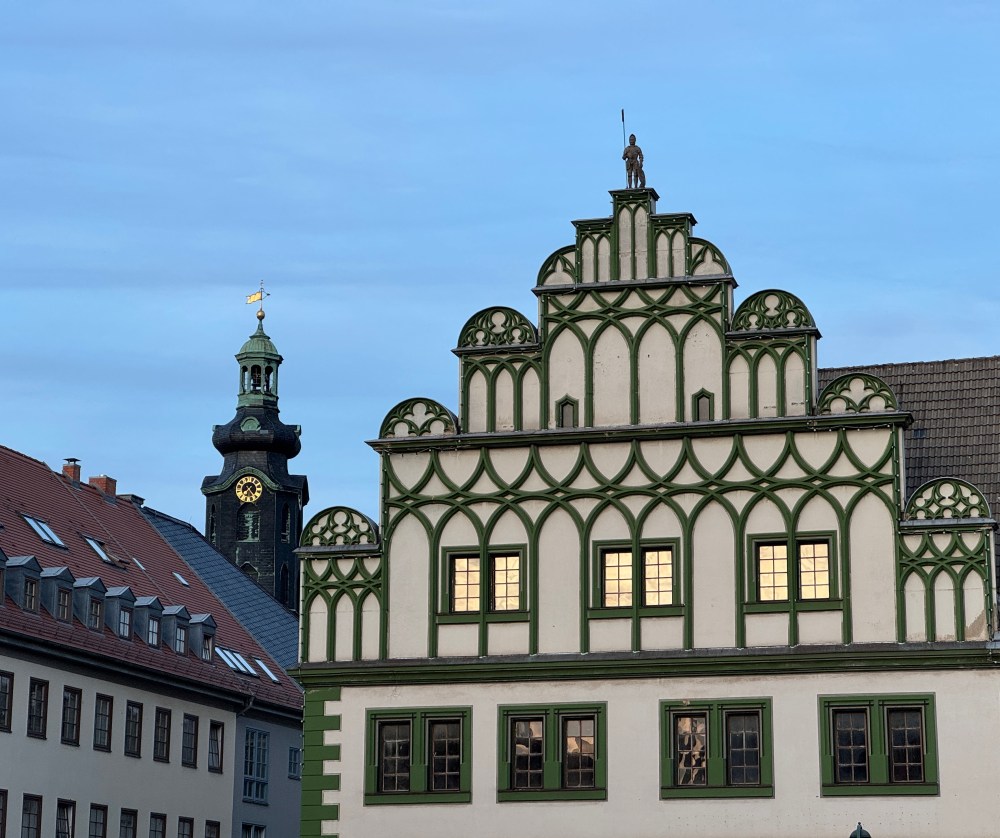
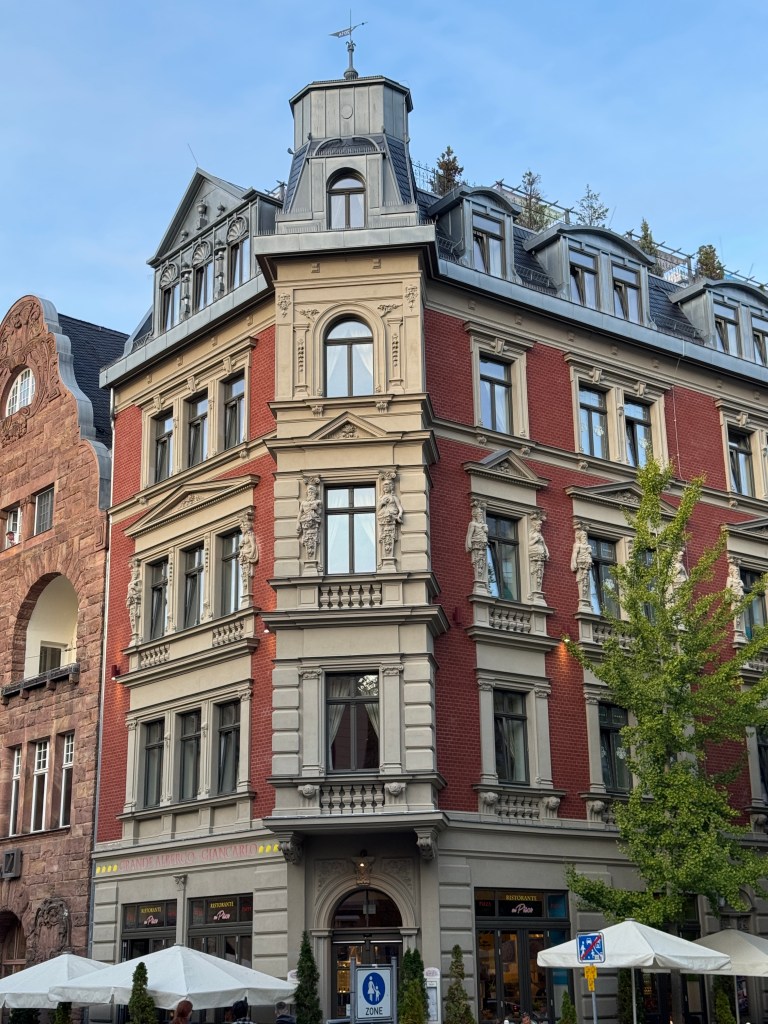
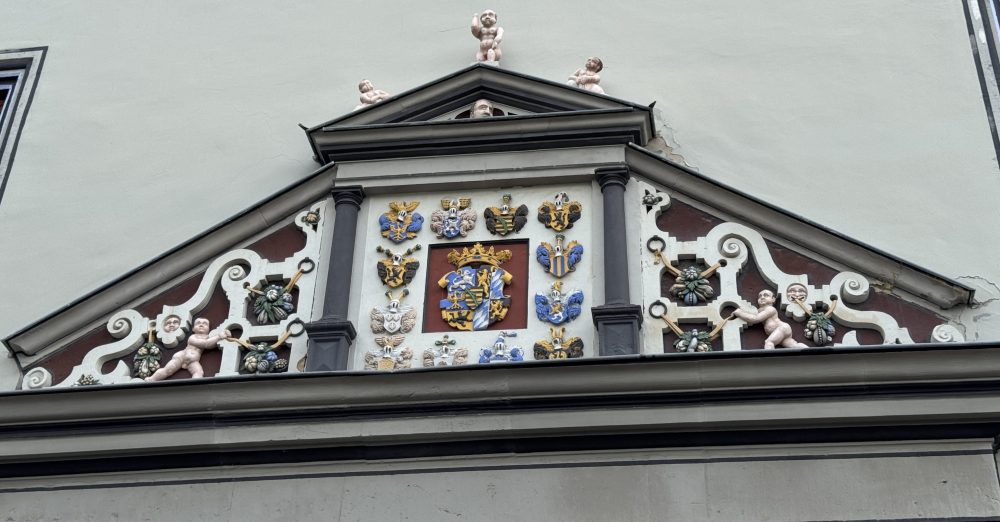
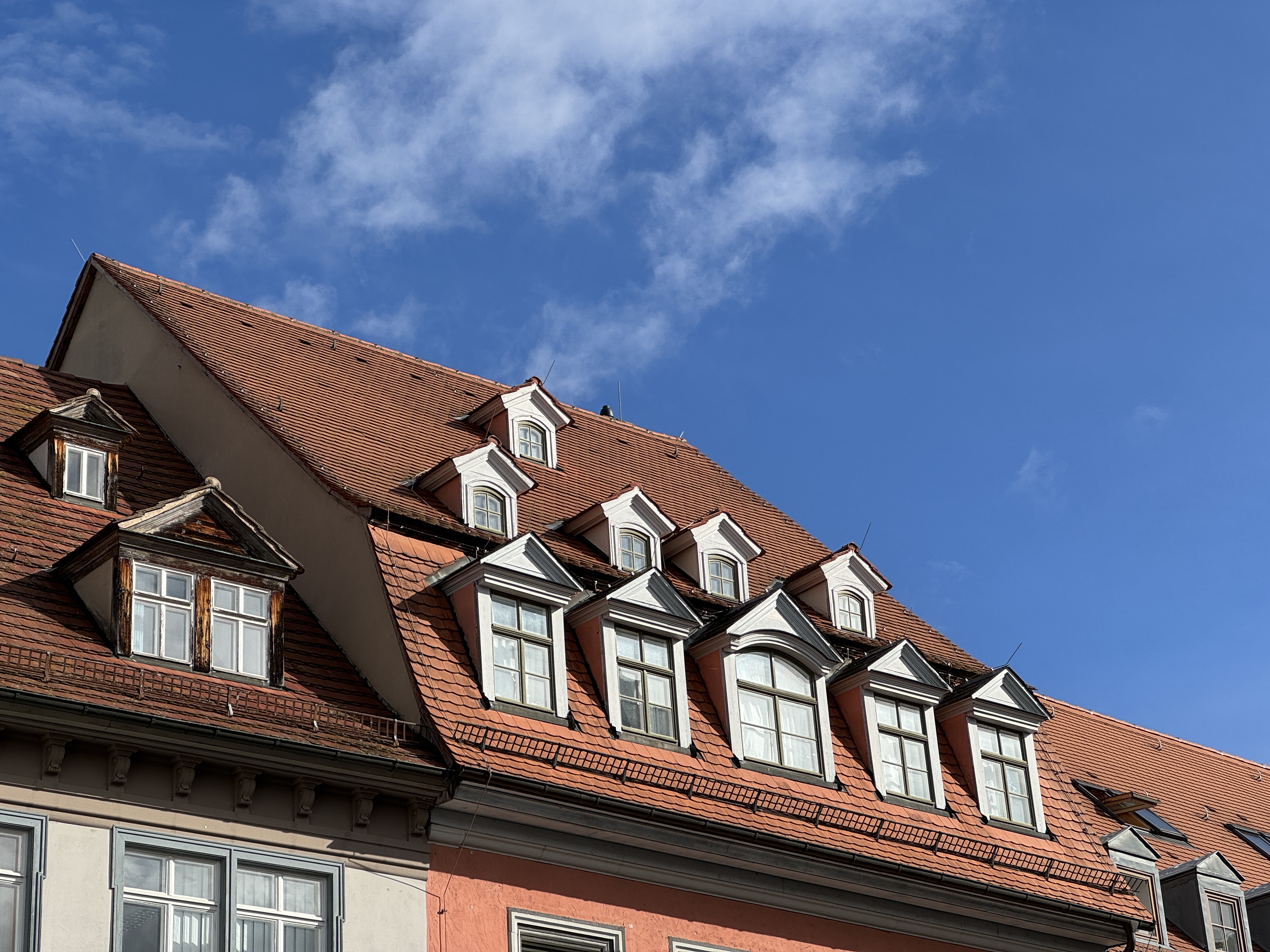
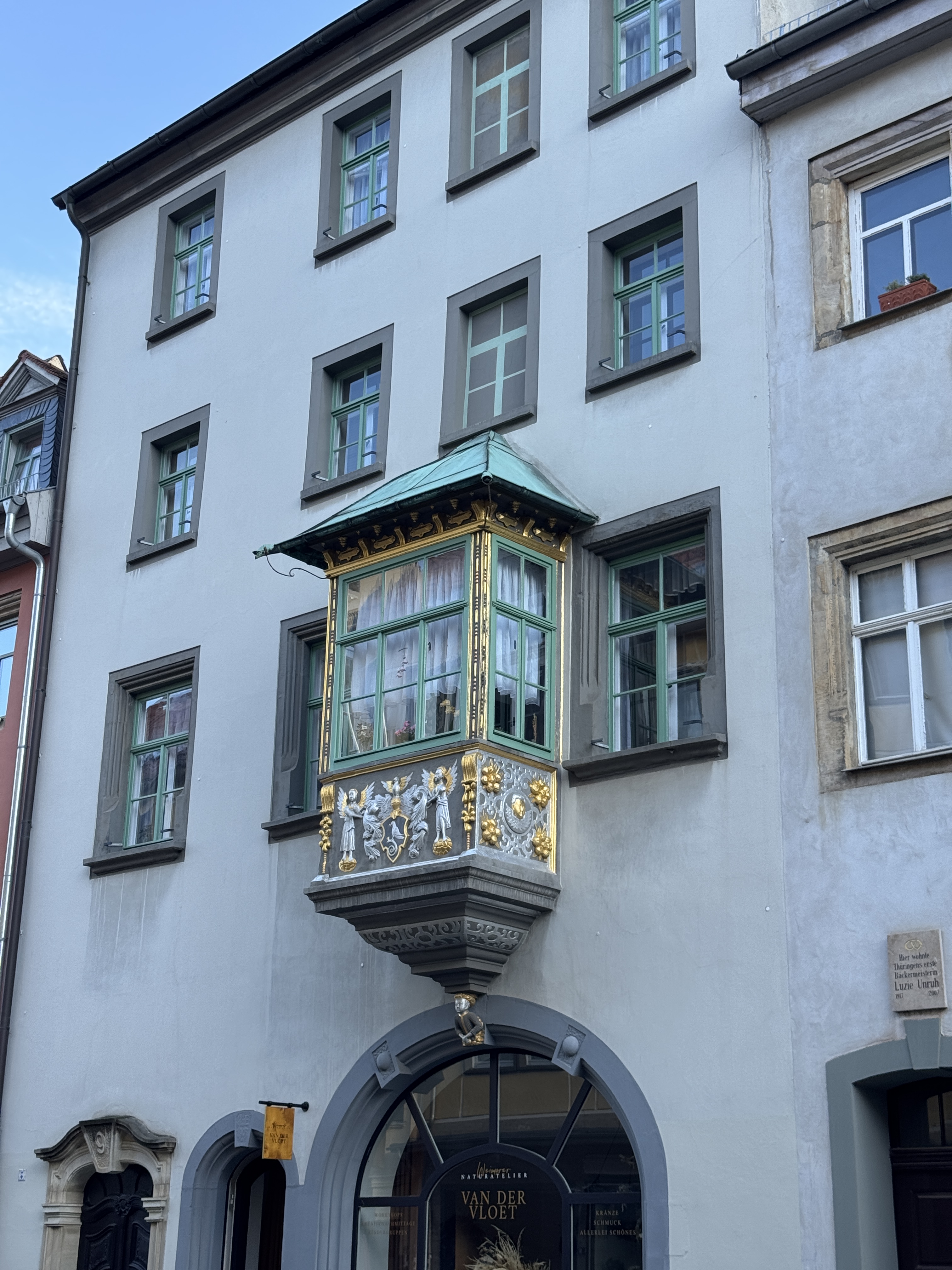
Our first impression set the tone for our time in Weimar. Beautifully preserved (or perhaps restored?) buildings and cobblestone streets fill the old town. (We have a love-hate relationship with cobblestones – great for ambience, awful for luggage with wheels.)

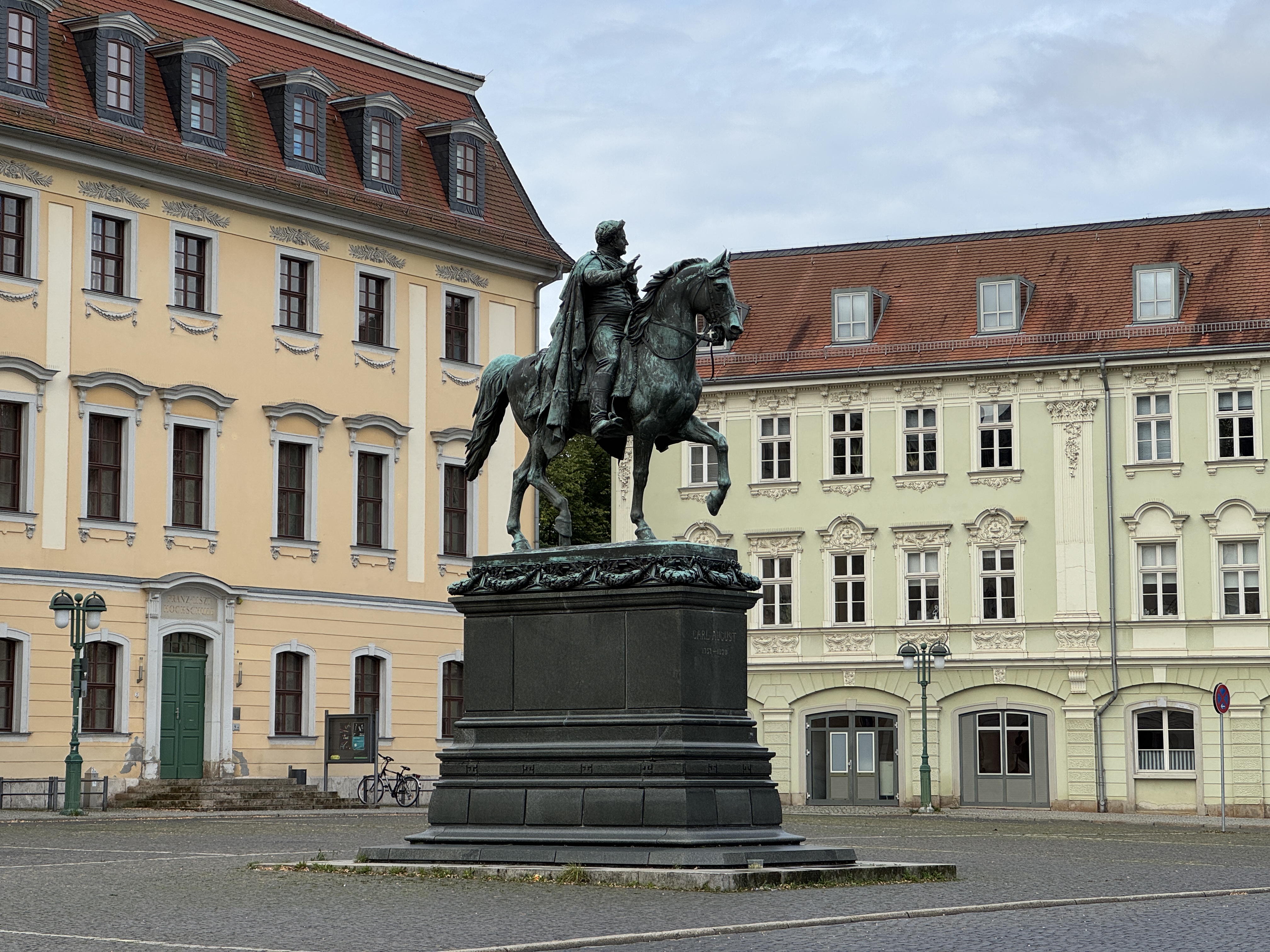

There are busts of famous writers and artists all over town. And if you’re really important, you get a full statue. Some we’d never heard of; others were decidedly not German, including Alexander Puschkin and William Shakespeare. Can you guess which one got the full statue?
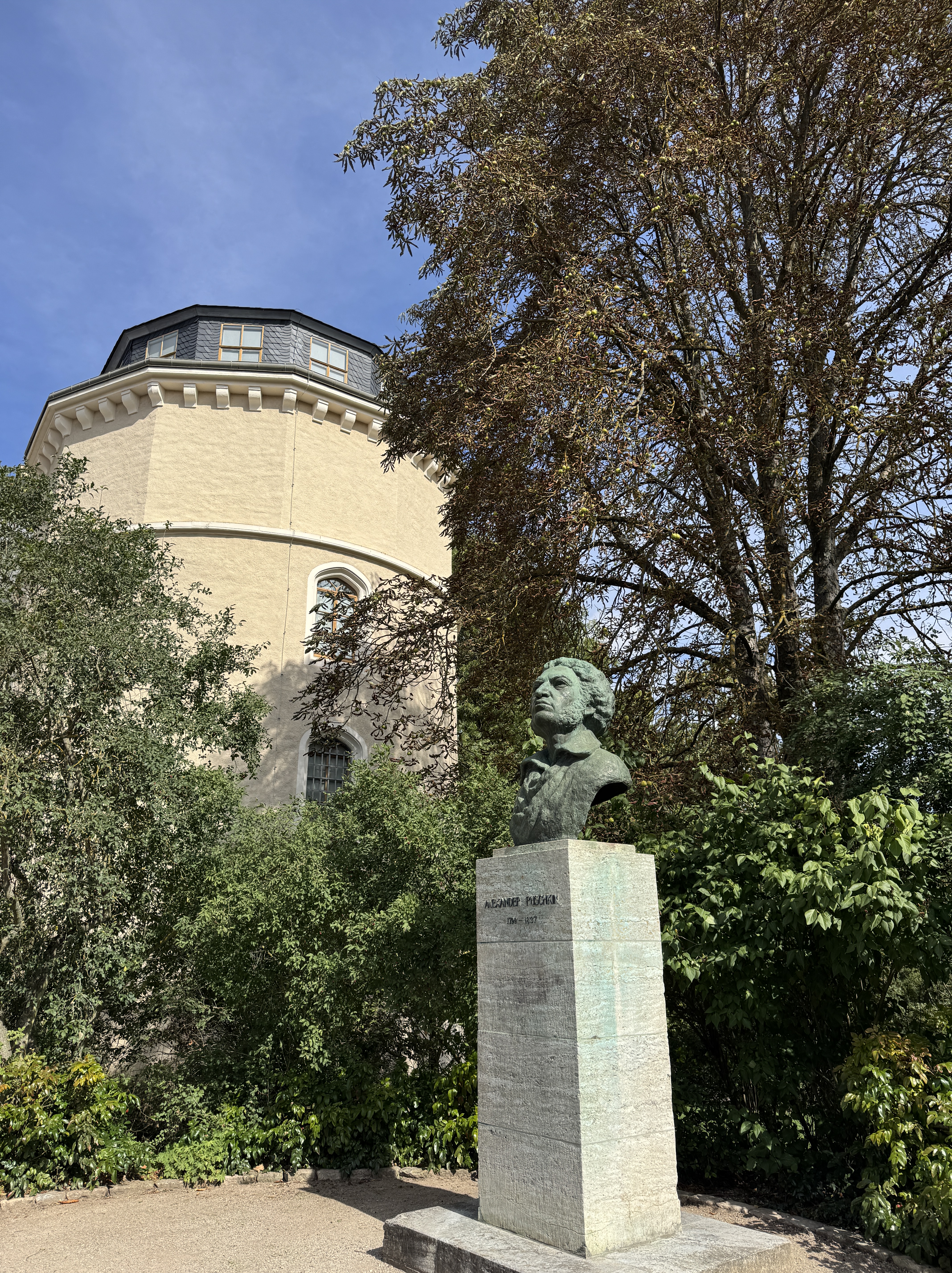
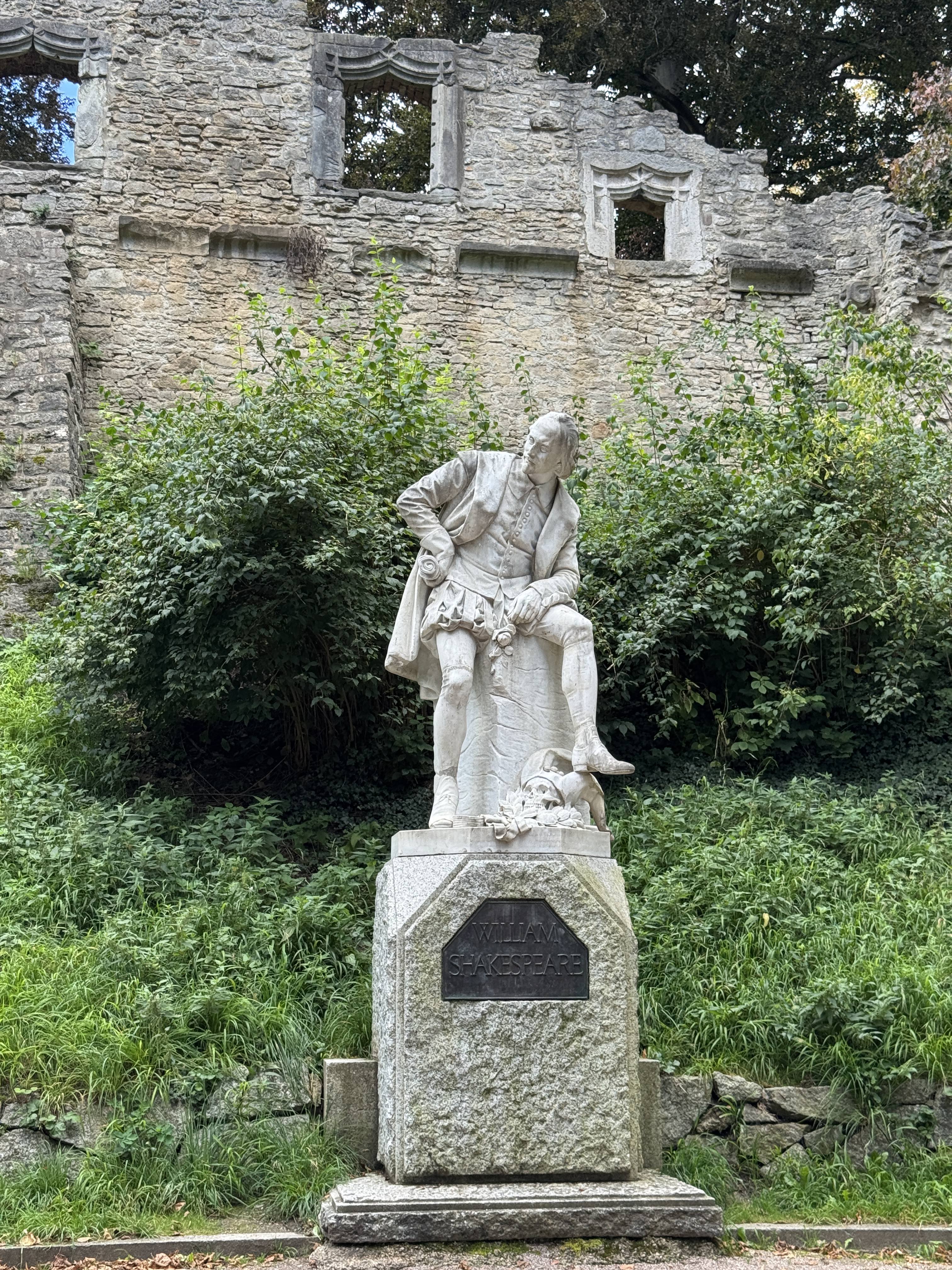
These two, and many others, are in the park on the Ilm river. Park design assistance from…Goethe. Inside the park – Goethe’s garden house.
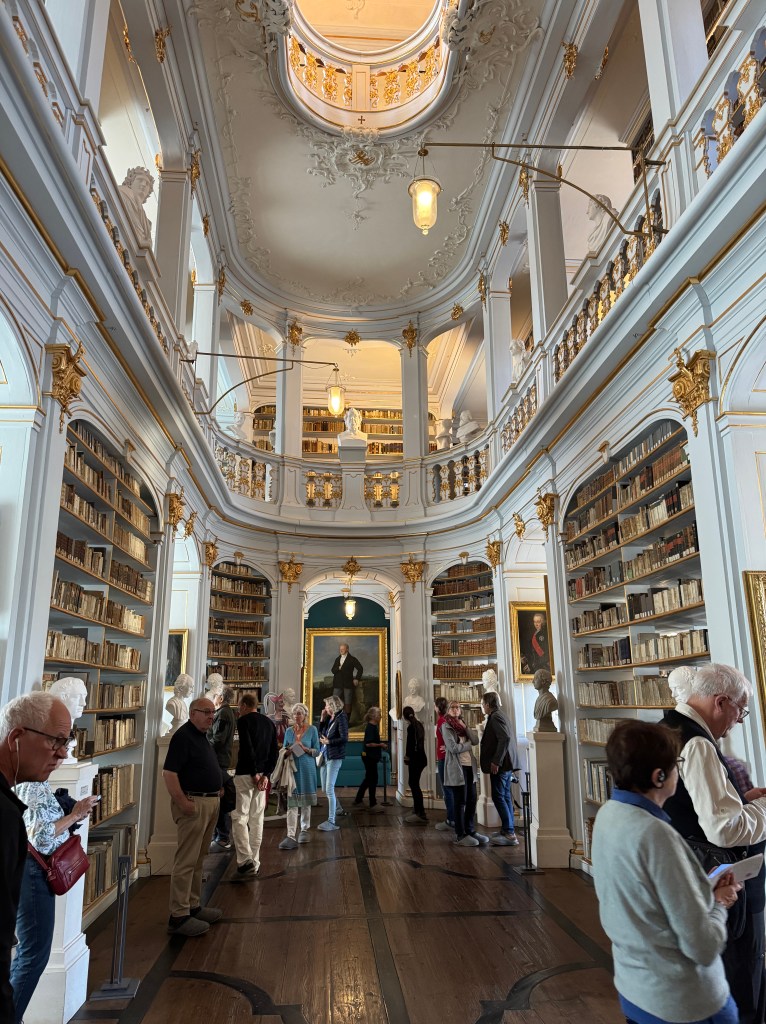
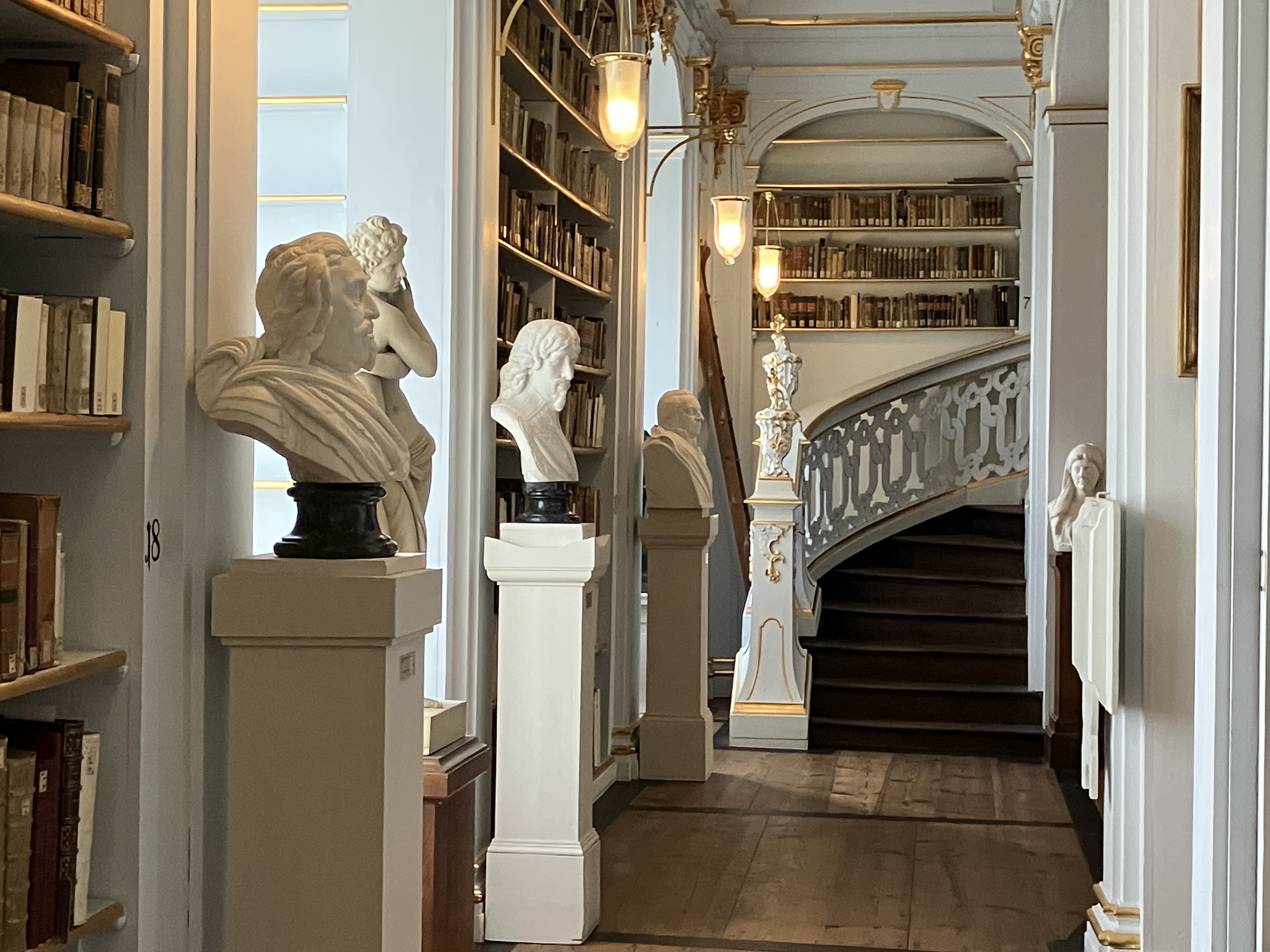
We toured the Duchess Anna Amalia’s gorgeous rococo library, which was managed for decades by, yes, you guessed it, Goethe. Presumably he was allowed to walk around in his regular shoes, not with the big felt slippers we had to shuffle around with. Notice how the tallest books are on the bottom shelf and the shortest on the top, making the bookshelves look taller than they are.

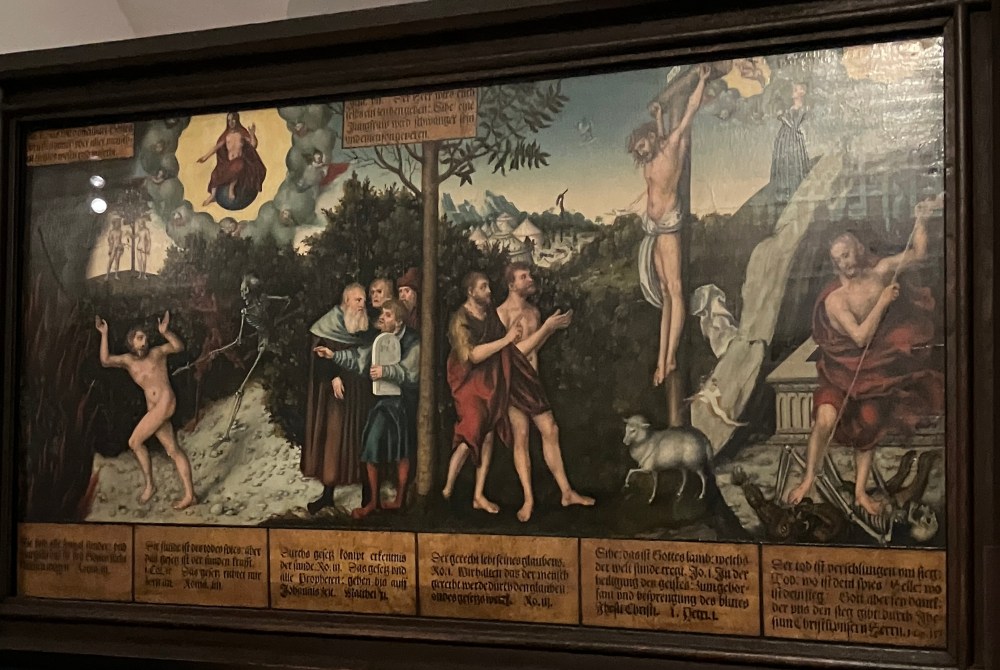
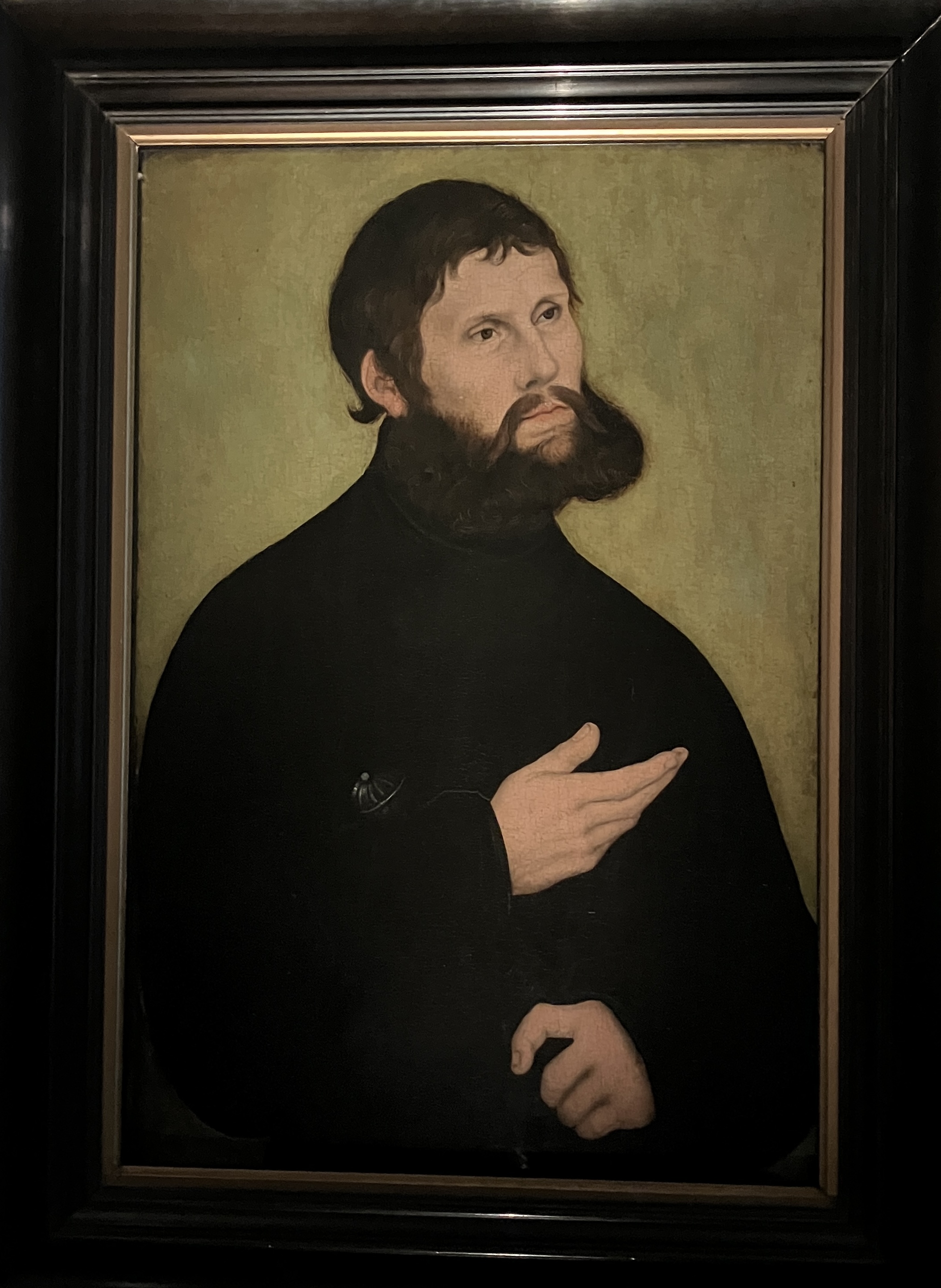
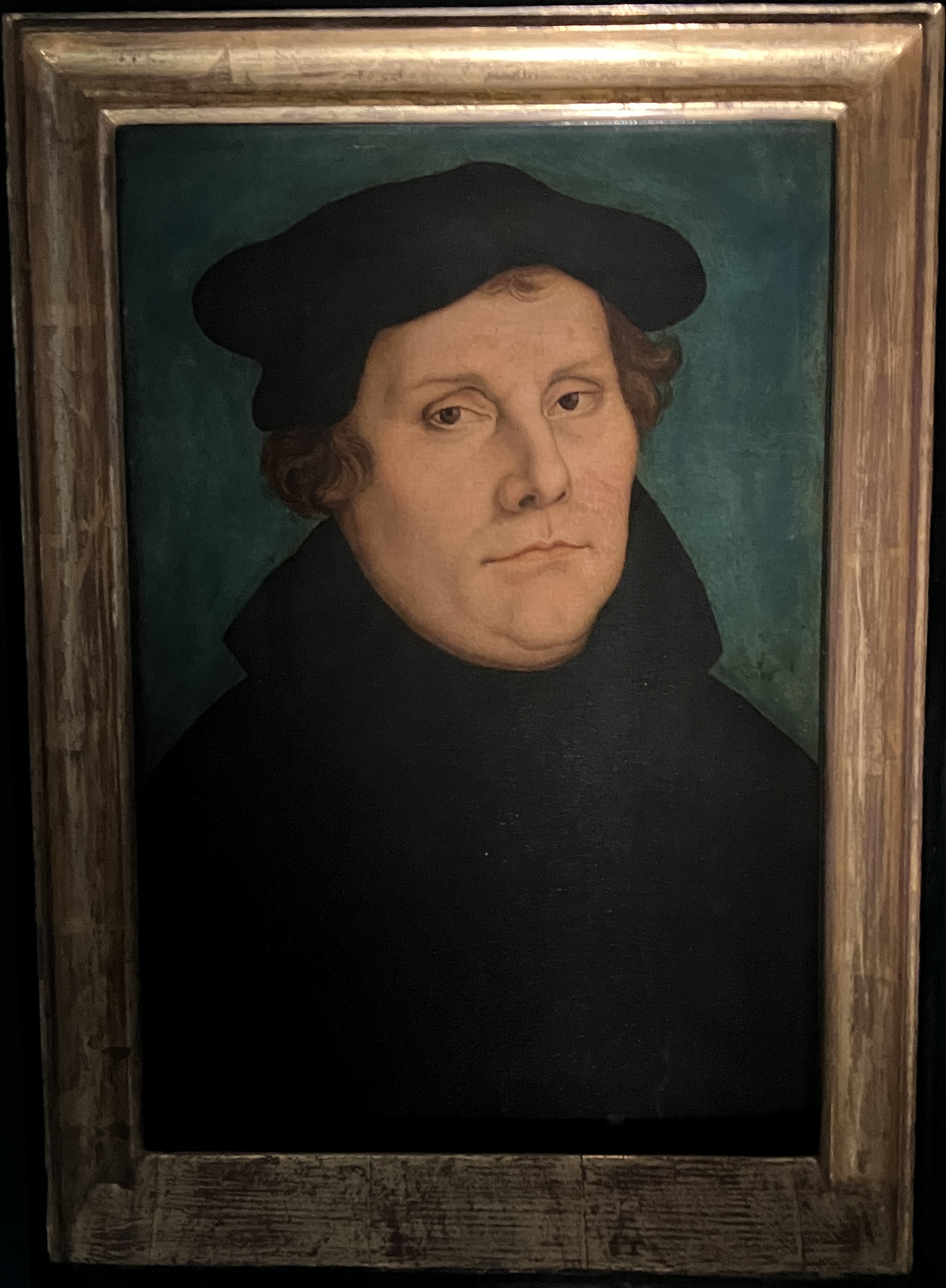
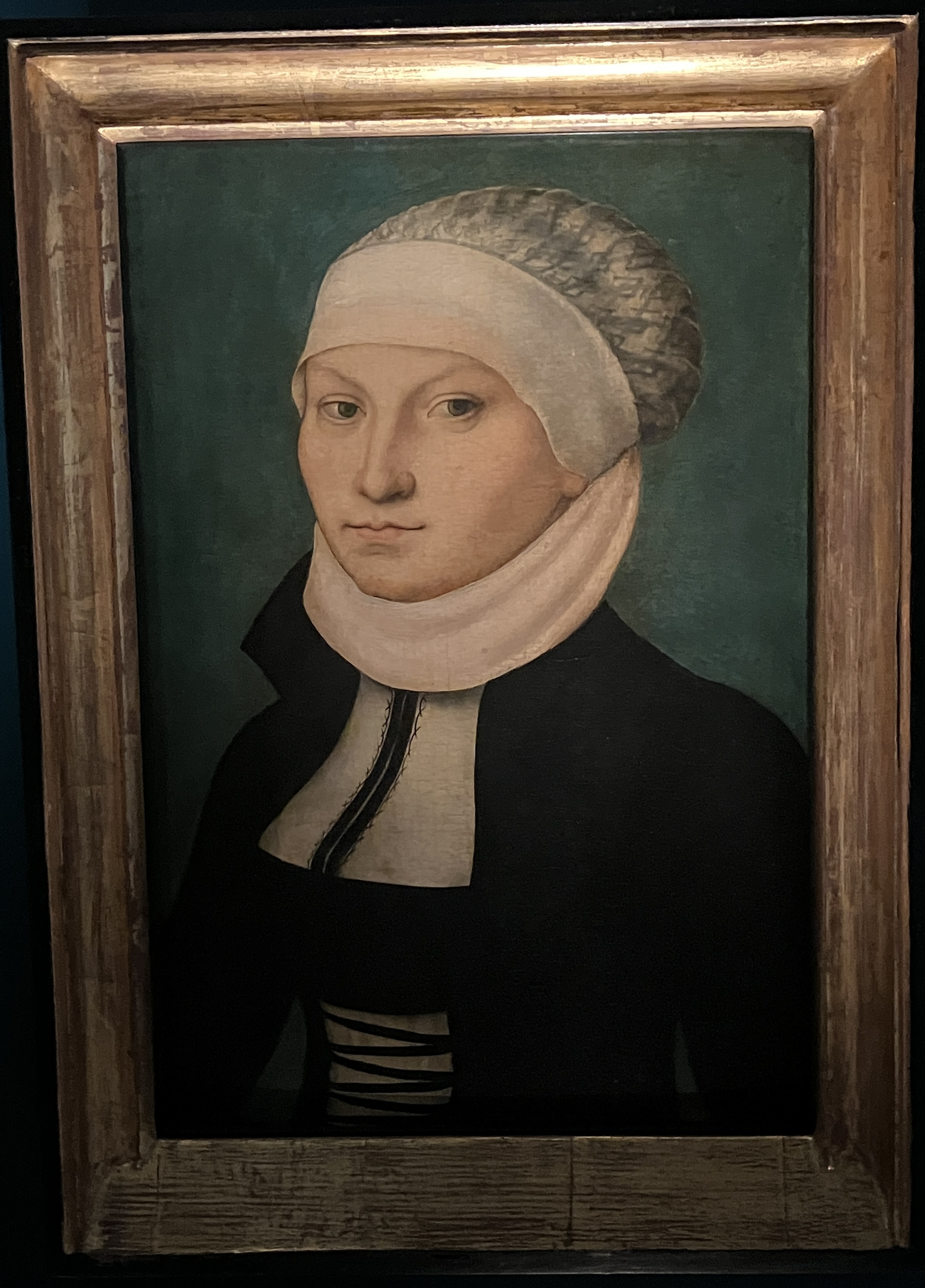
Downstairs was an exhibit from two artists named Cranach, father and son, of whom we’d never heard. As the audio guide went into great detail about the painting below, naming the saints and towns in each scene, I started to wonder how art historians figure out who’s who in all these old paintings. Then I noticed the written description included in the painting. Duh. However, it did emphasize that every single thing in these paintings has meaning – you just have to be able to figure it out.
The Cranachs were contemporaries of Martin Luther and painted him several times. There’s quite a contrast between an early painting, where he looks like an ascetic firebrand, and a later one, after he’d stopped being a monk and married a former nun. There he looks more like a prosperous bourgeois.
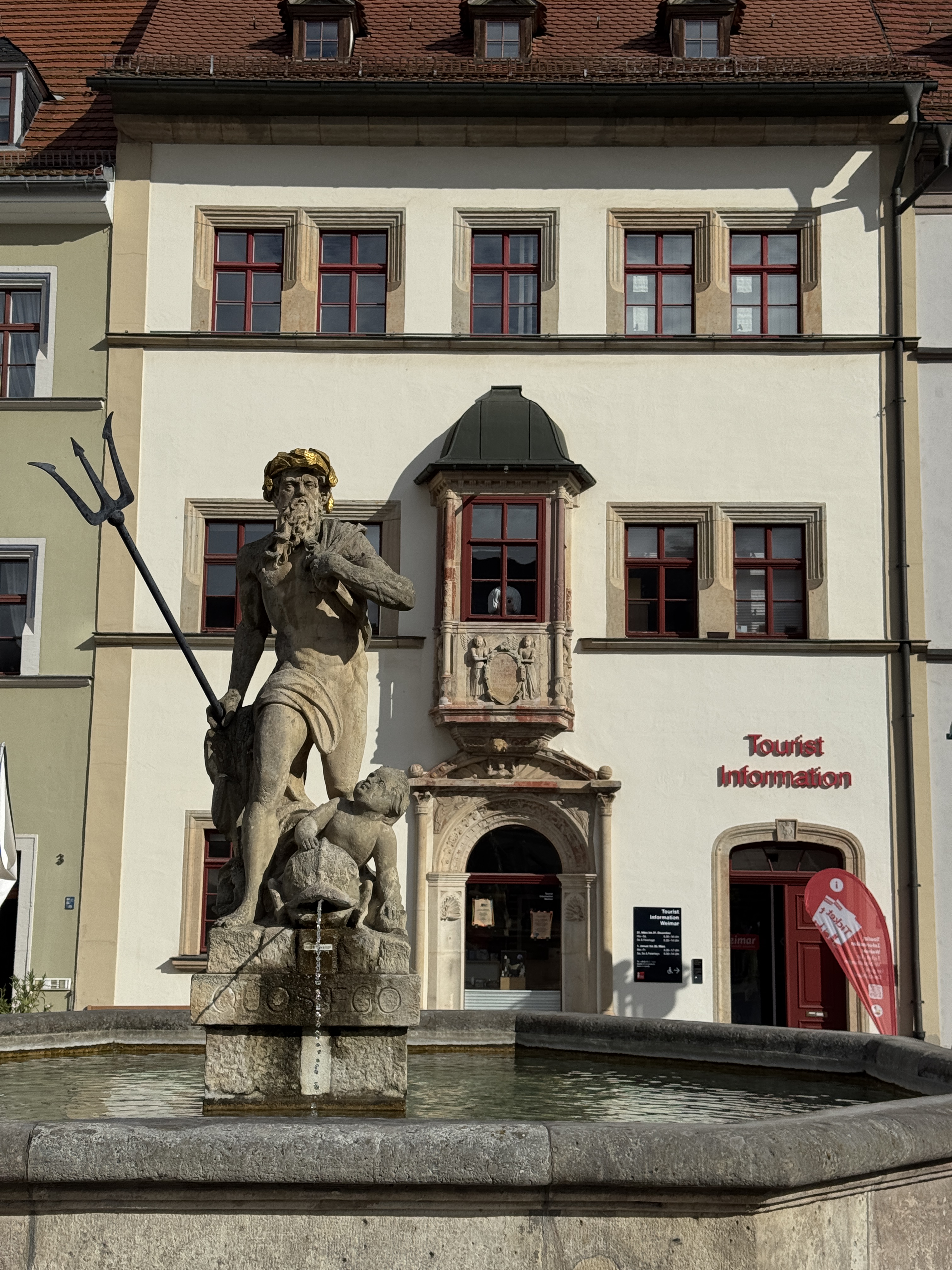
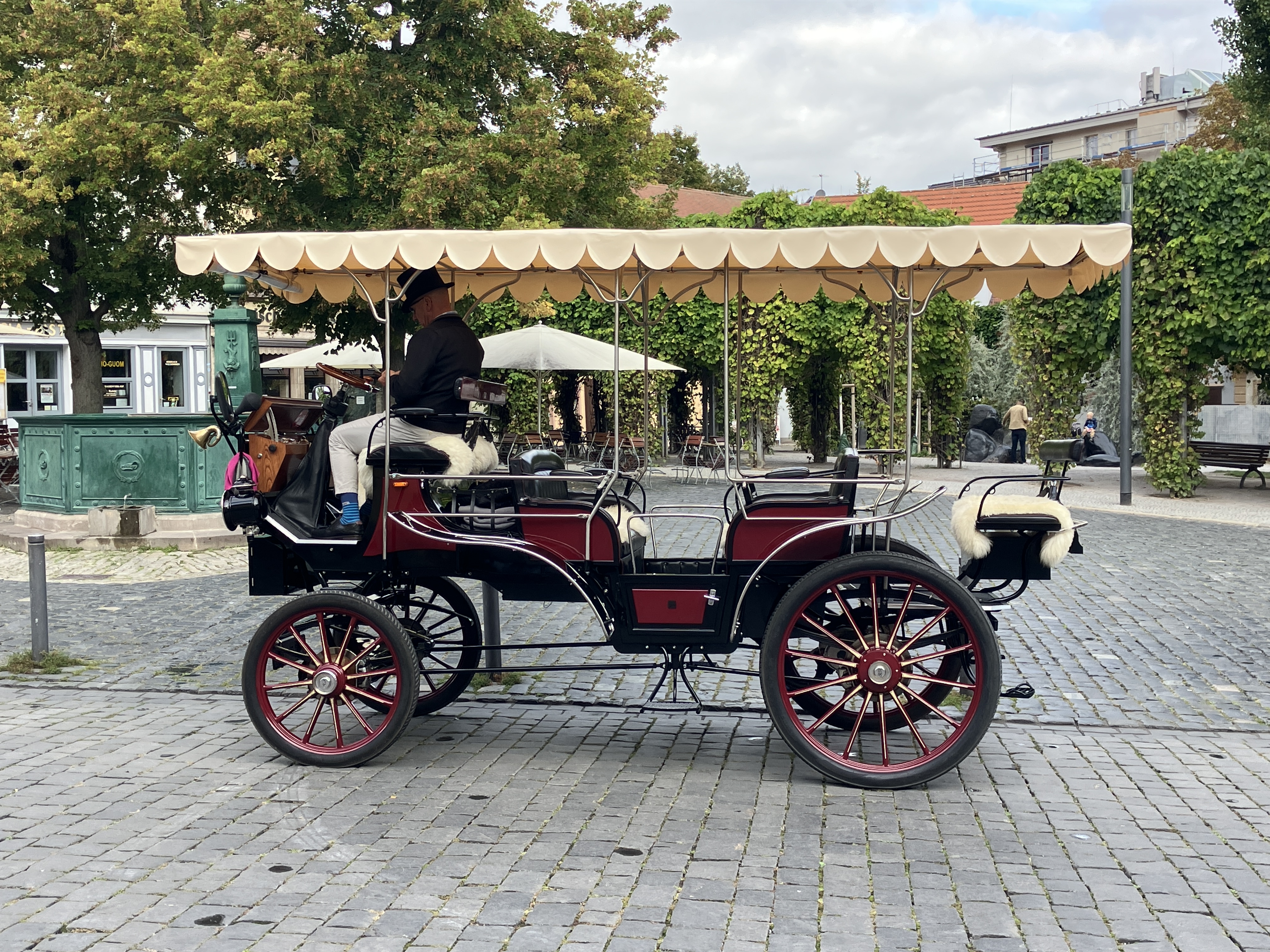
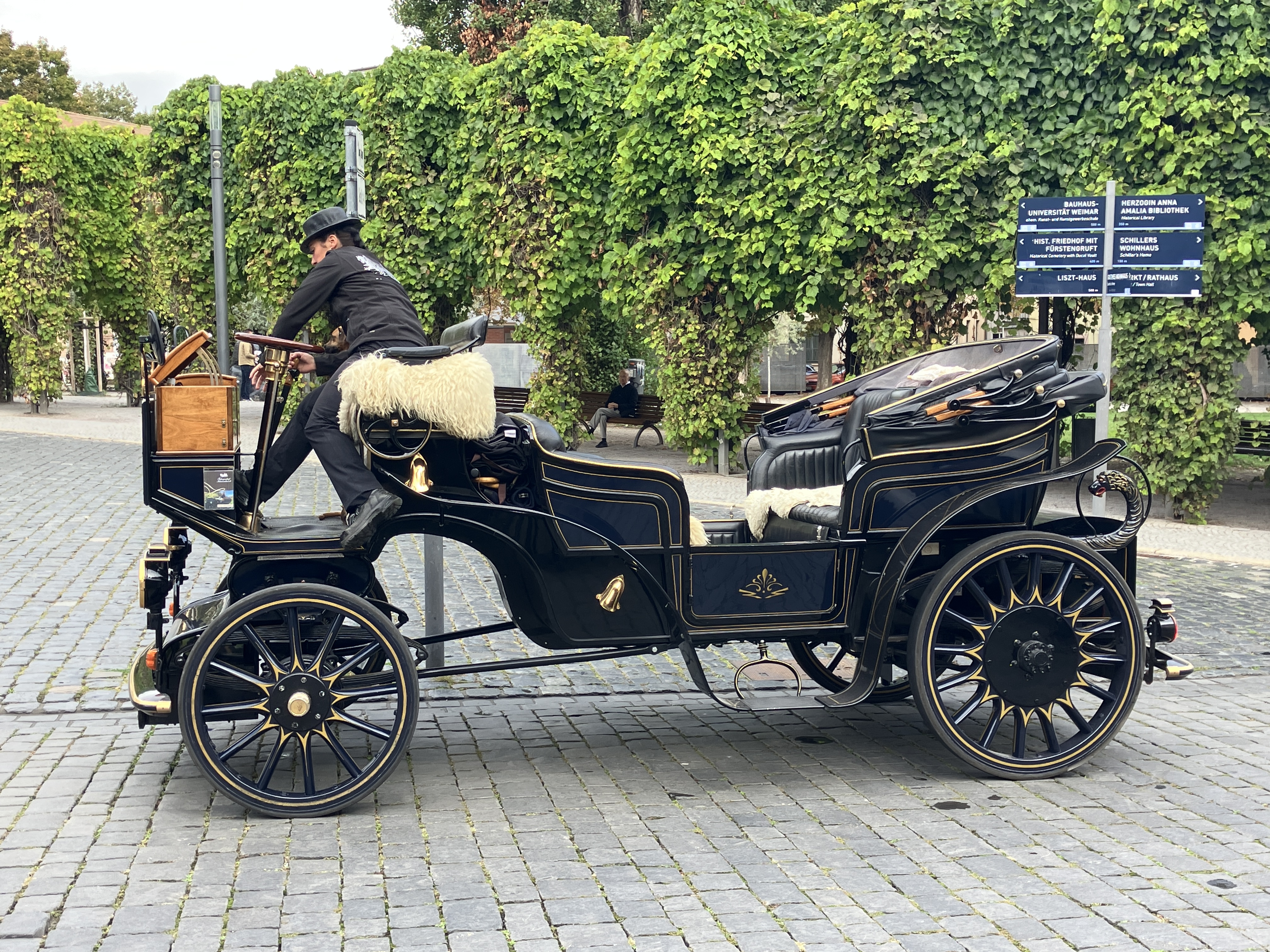
Back out on the streets, there was the usual mix of old and new – plus horseless carriages!
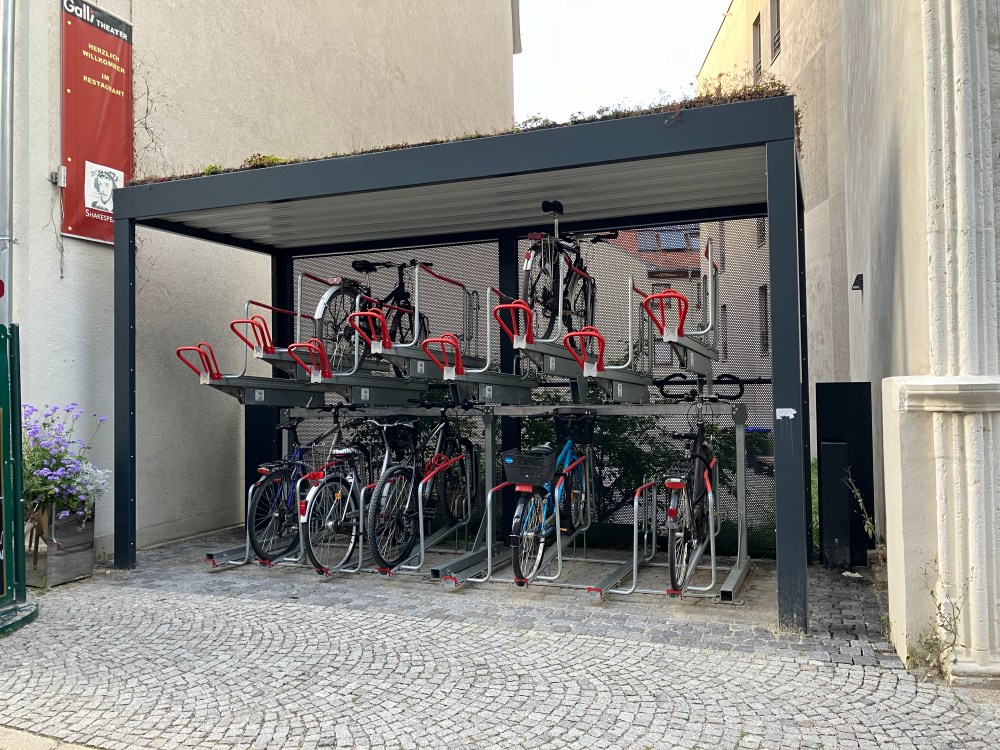

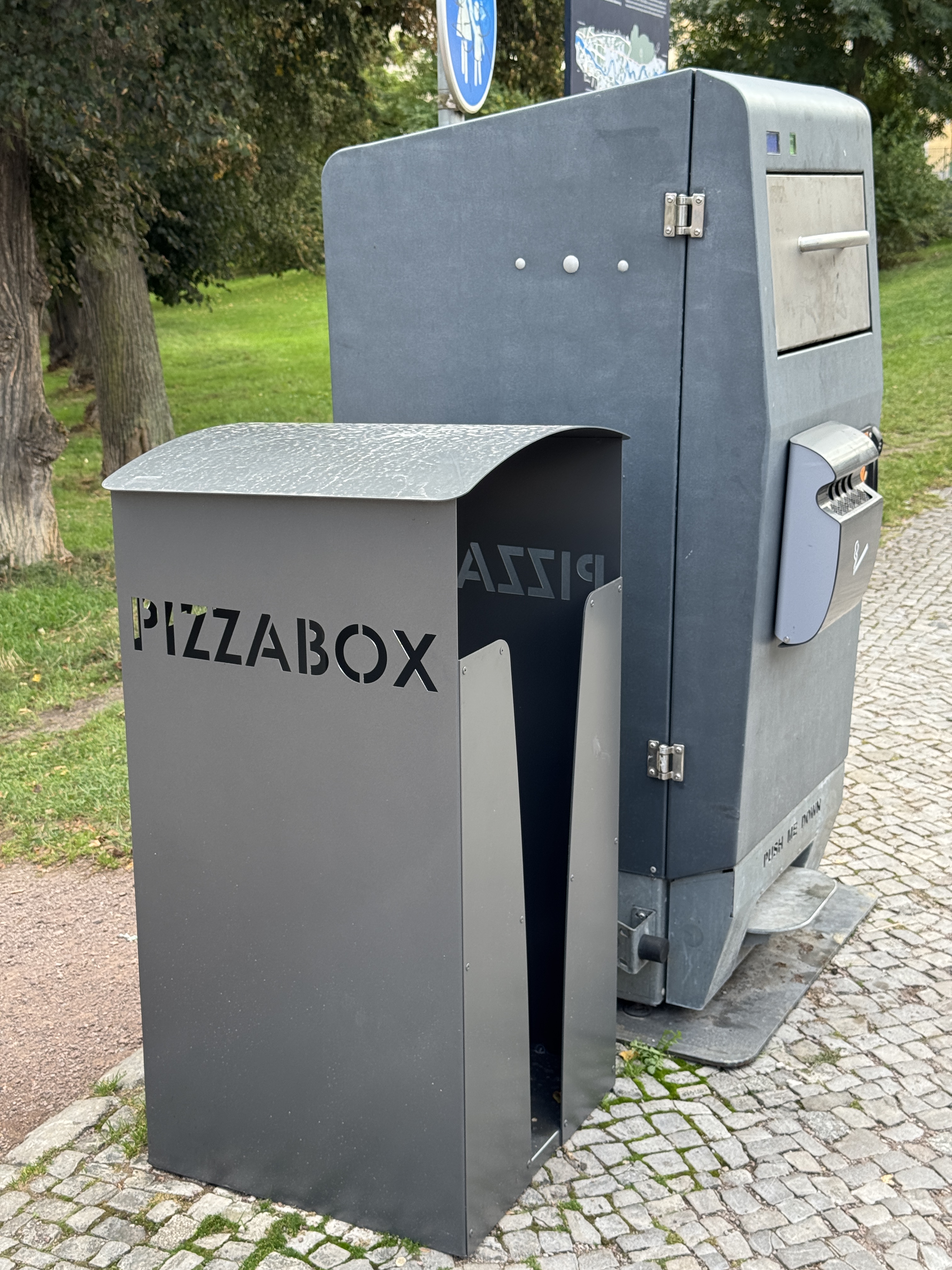
Apparently, Germans eat a lot of take-out pizza at the park – they even have trash receptacles for pizza boxes!
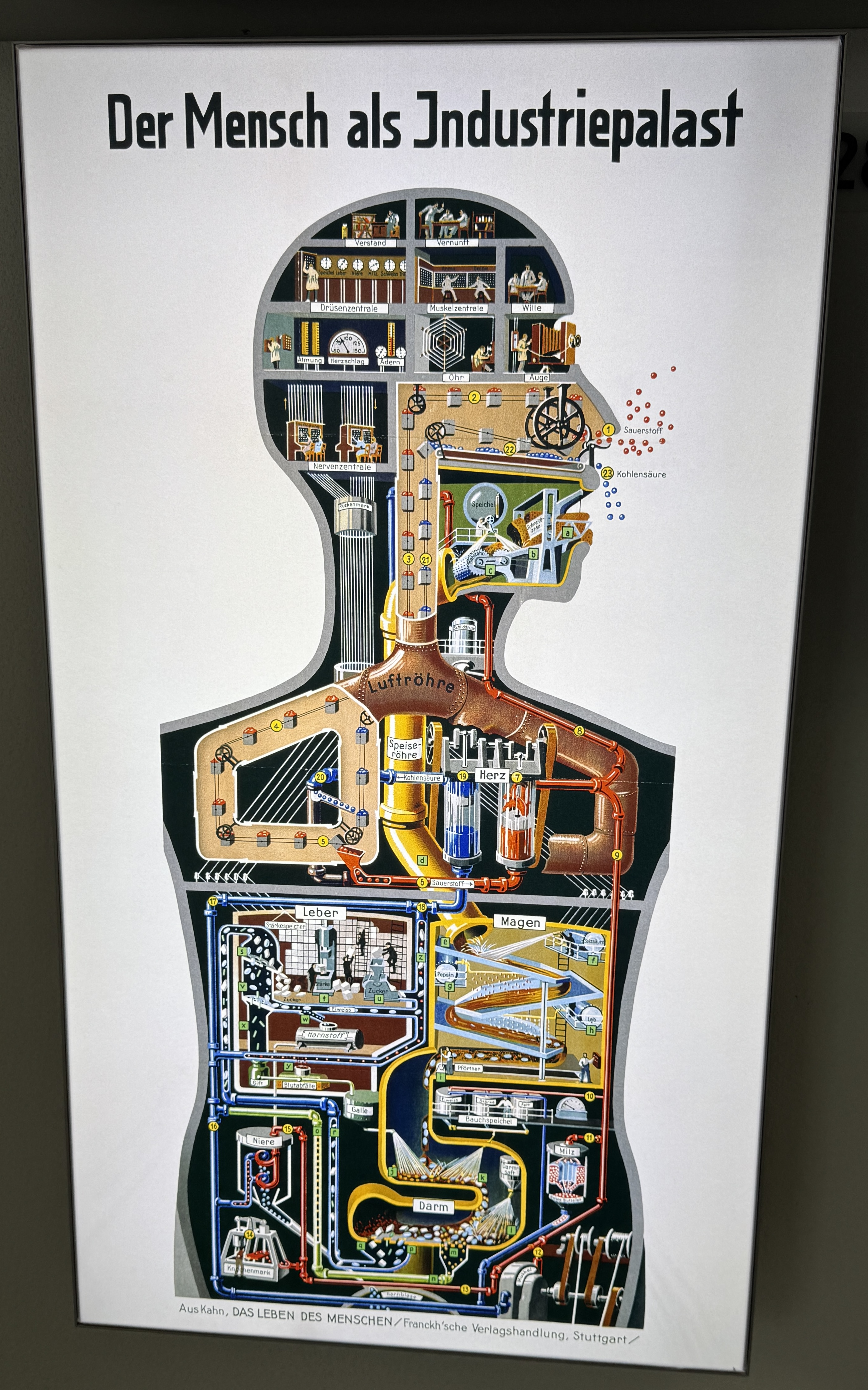
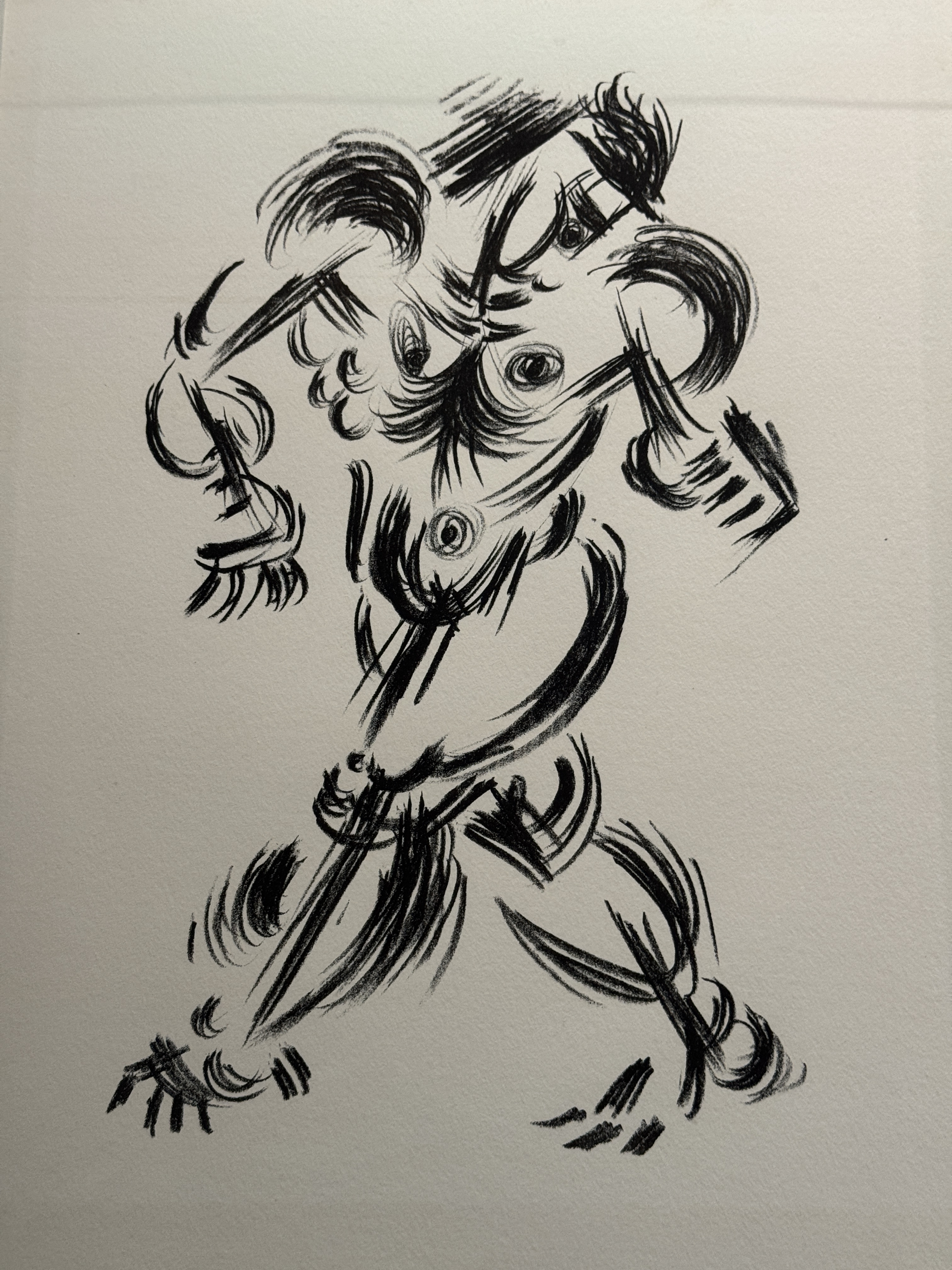
Neither of us knew much about the Bauhaus movement (not founded by Goethe!) that started here in Weimar in the 1920s. Having visited the Bauhaus museum, we now have an inkling. In particular, there are a lot of household goods sold today that are based on, or identical to, Bauhaus designs. And they weren’t just designs. Bauhaus actually produced and sold things – furniture, fabric, ceramics, bookbinding, housewares, art, even a house.
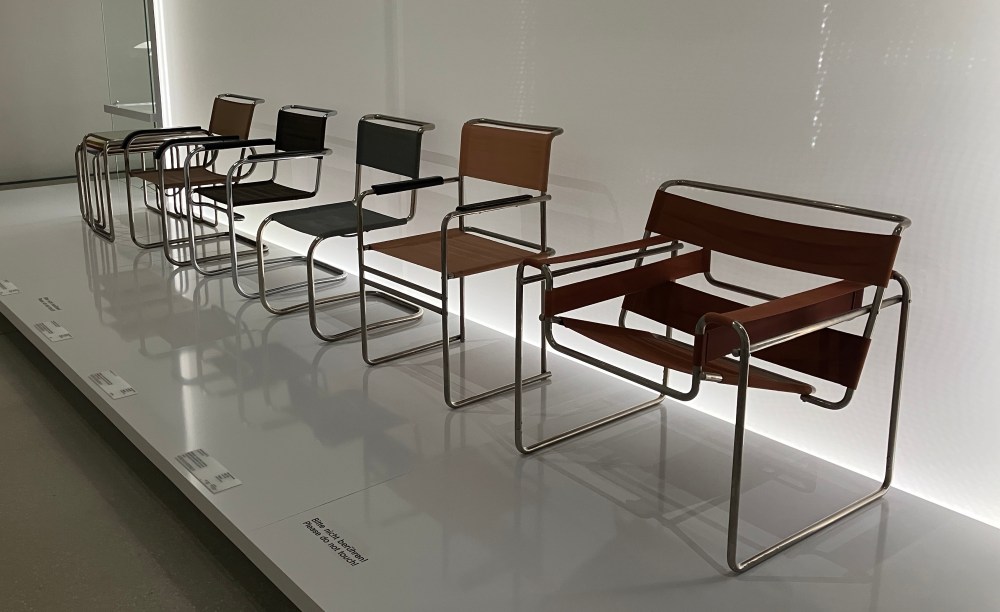
For instance, you see chairs like these all over. (Well, not the one on the right… They had reproductions you could sit on and it was not comfortable.) At the far end was a set of nesting tables I’d be happy to own today.
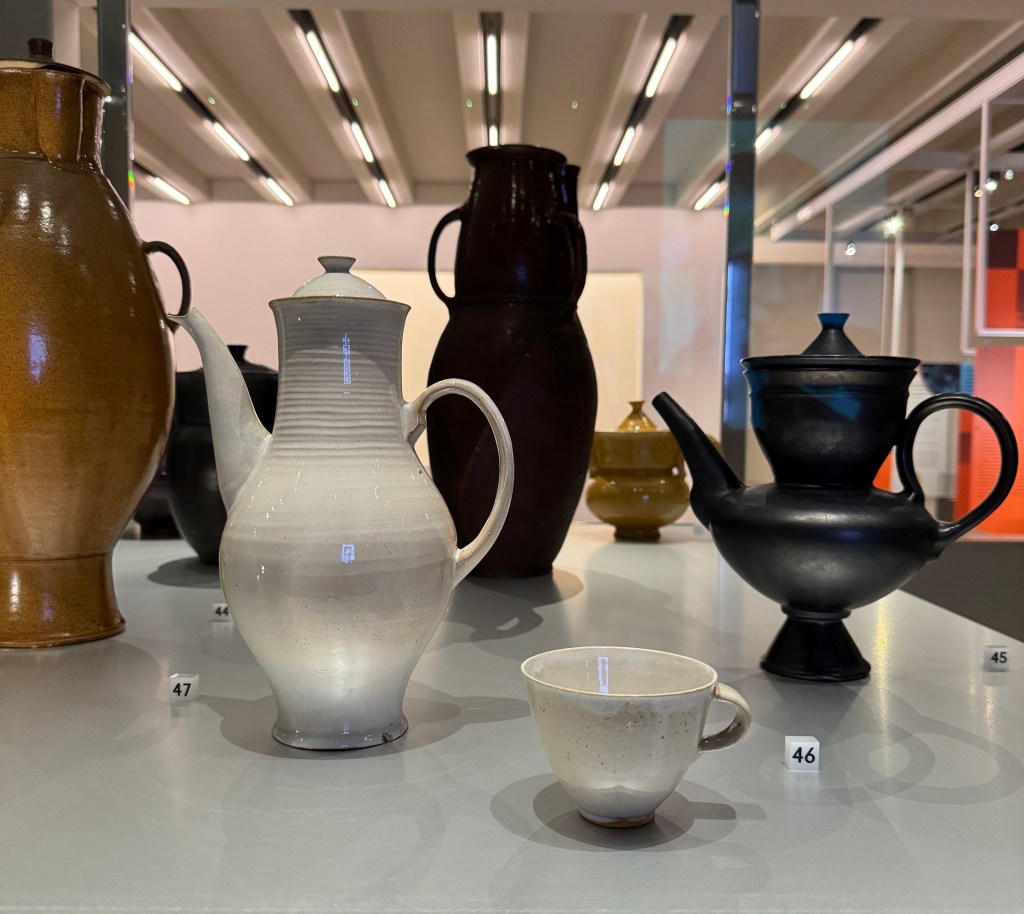
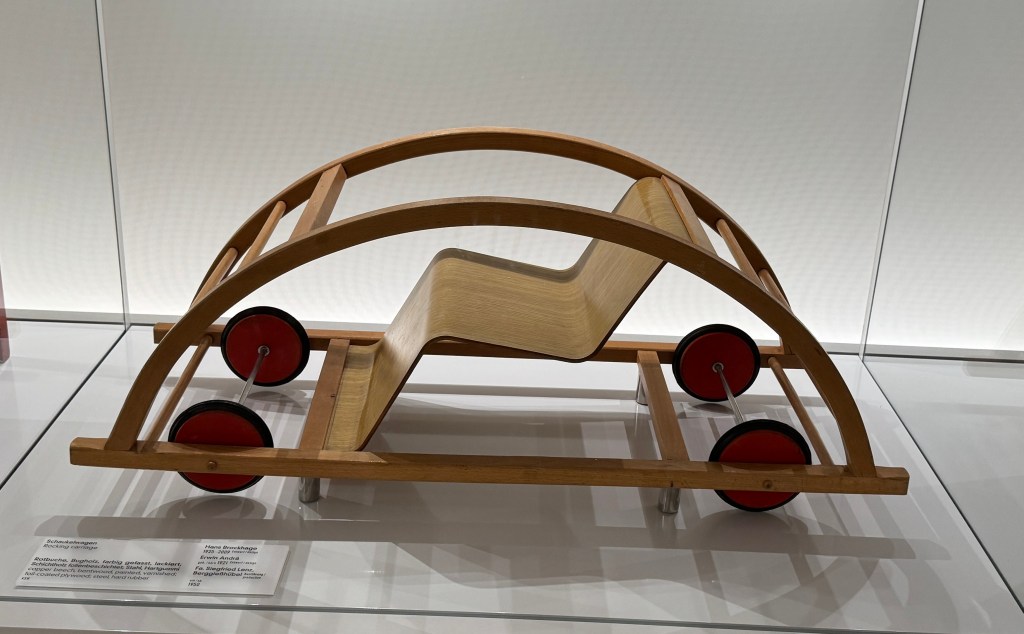
Beyond the products, we found the Bauhaus teaching methods interesting. Classes were offered by masters in many disciplines and many refused to teach design theory. They wanted the students to experiment and figure things out on their own. Paul Klee was an exception. I particularly liked this bit of his teaching: “How does a point become a line? When it takes a stroll, it becomes wavy, but if it marches with purpose, it means business and straightens into a line.”

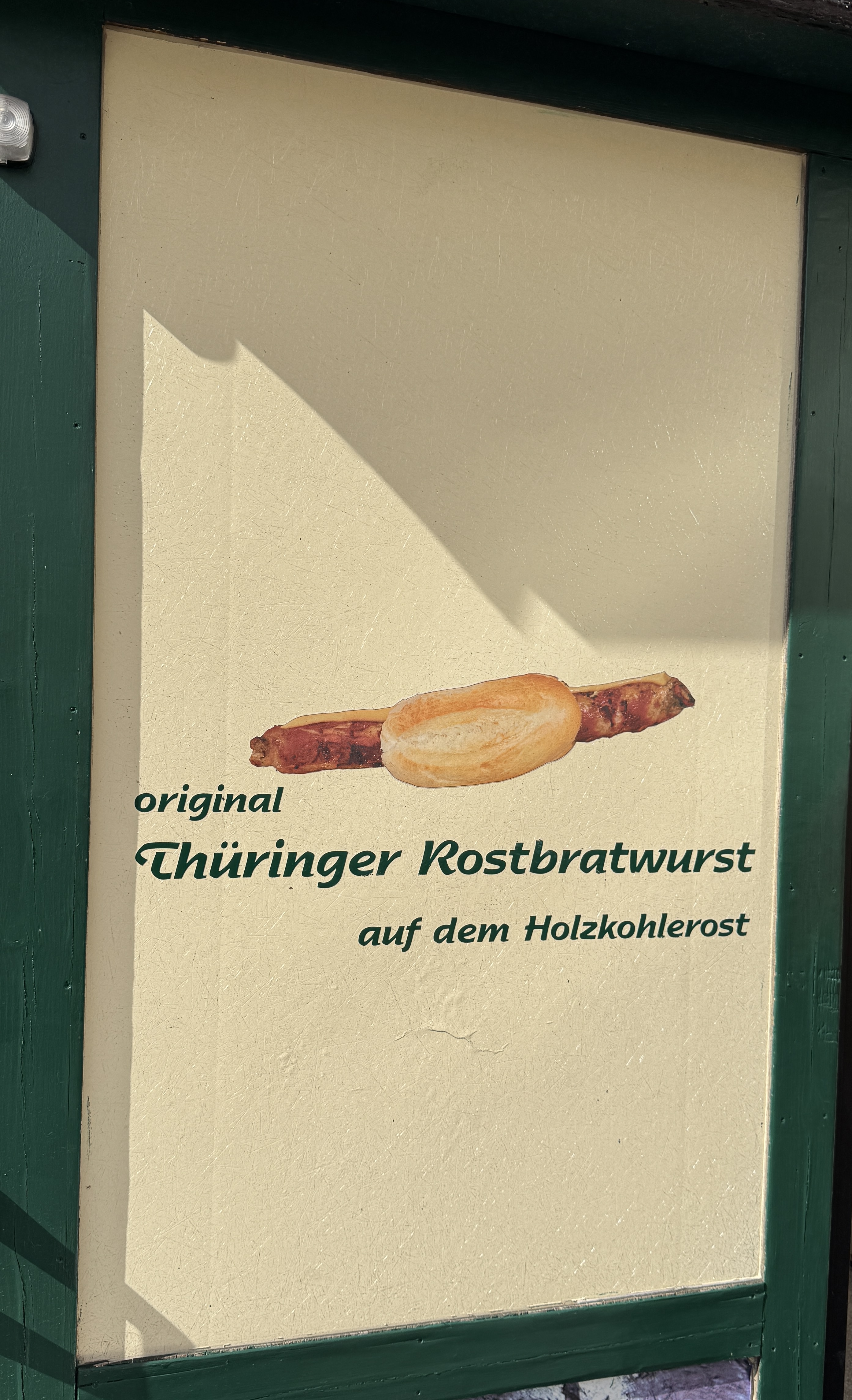
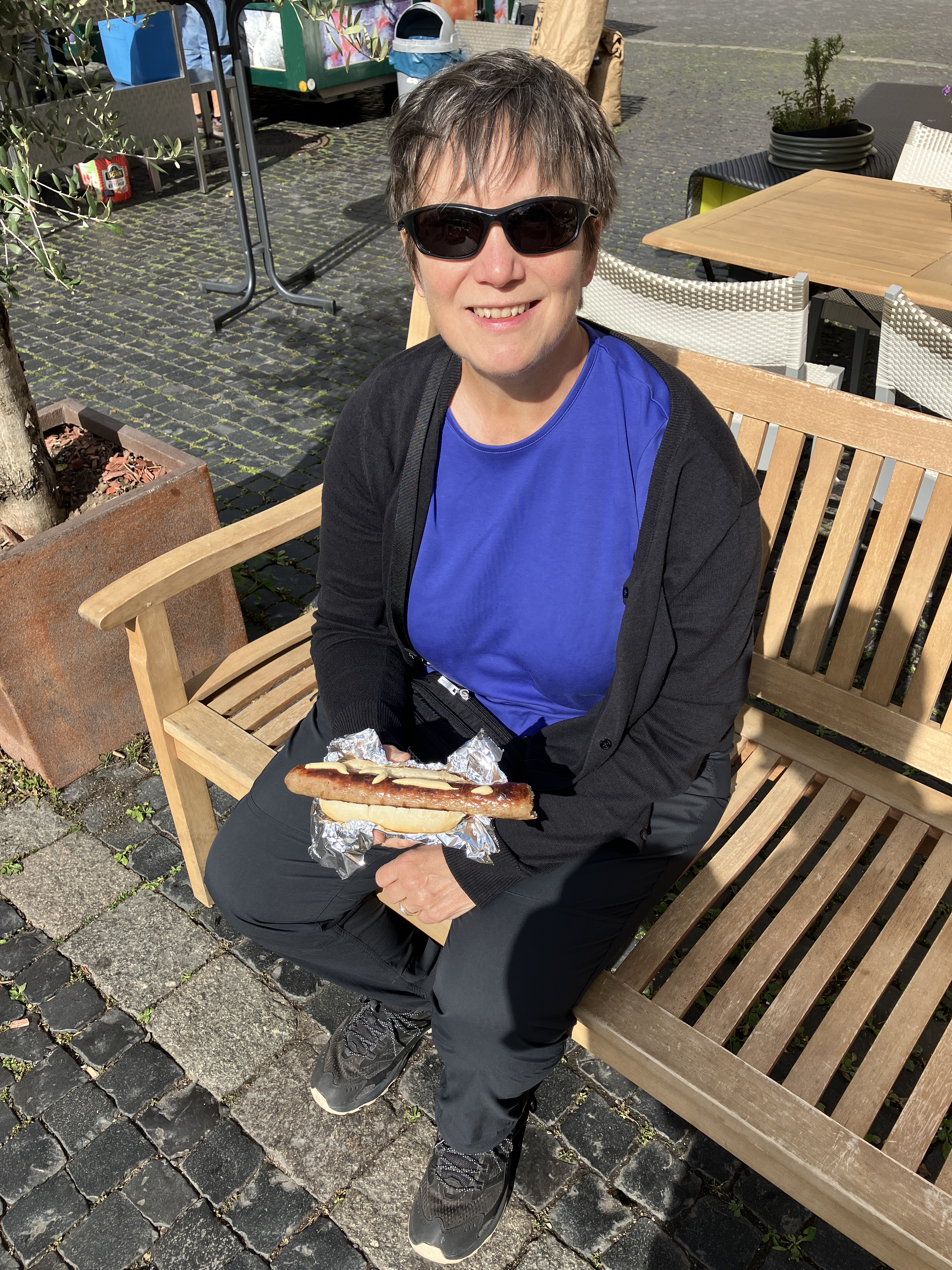
Back out on the streets, it was time to try the local sausage (wurst). Every area in Germany has their specialty. Here it’s a long sausage on a small bun.
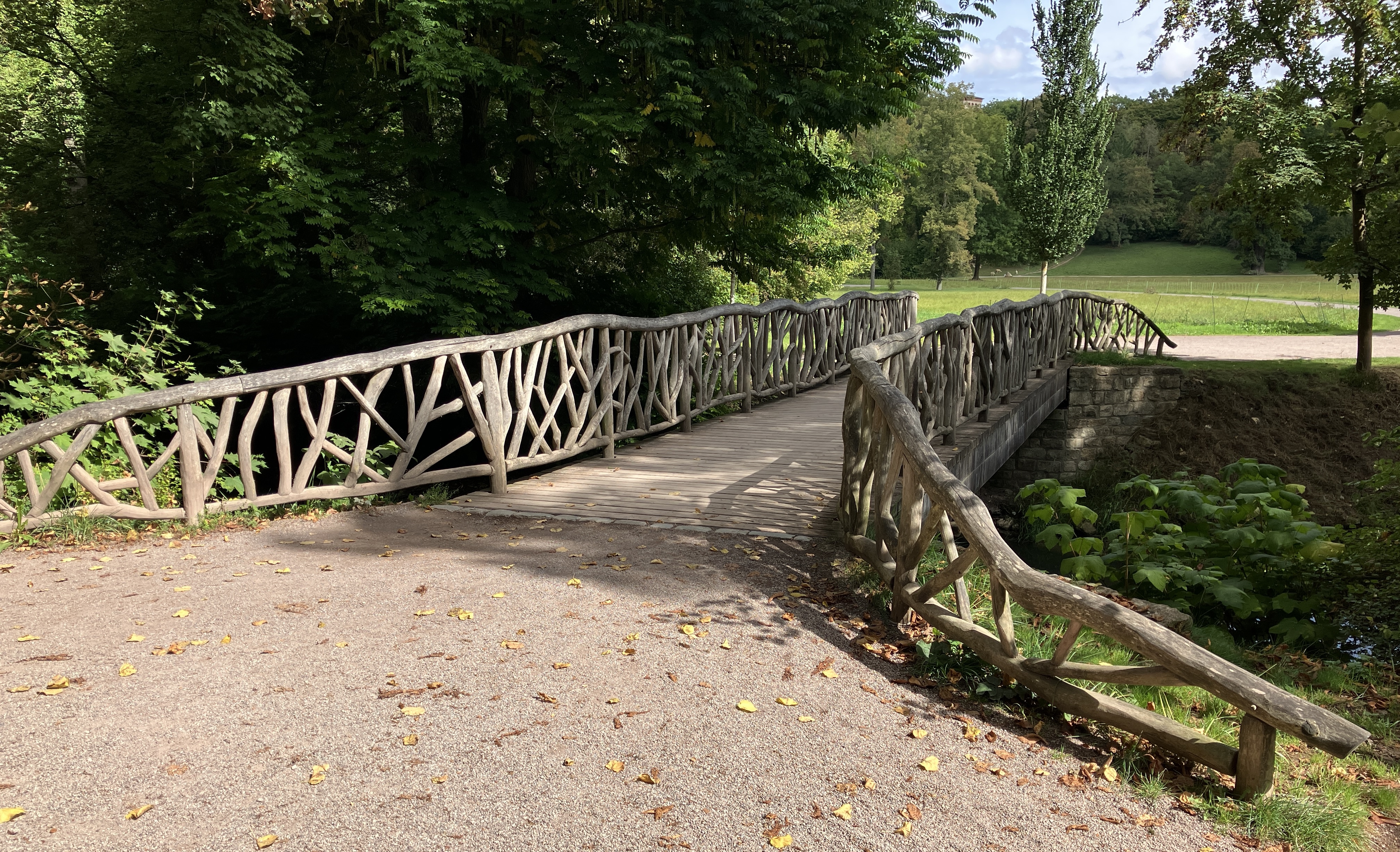
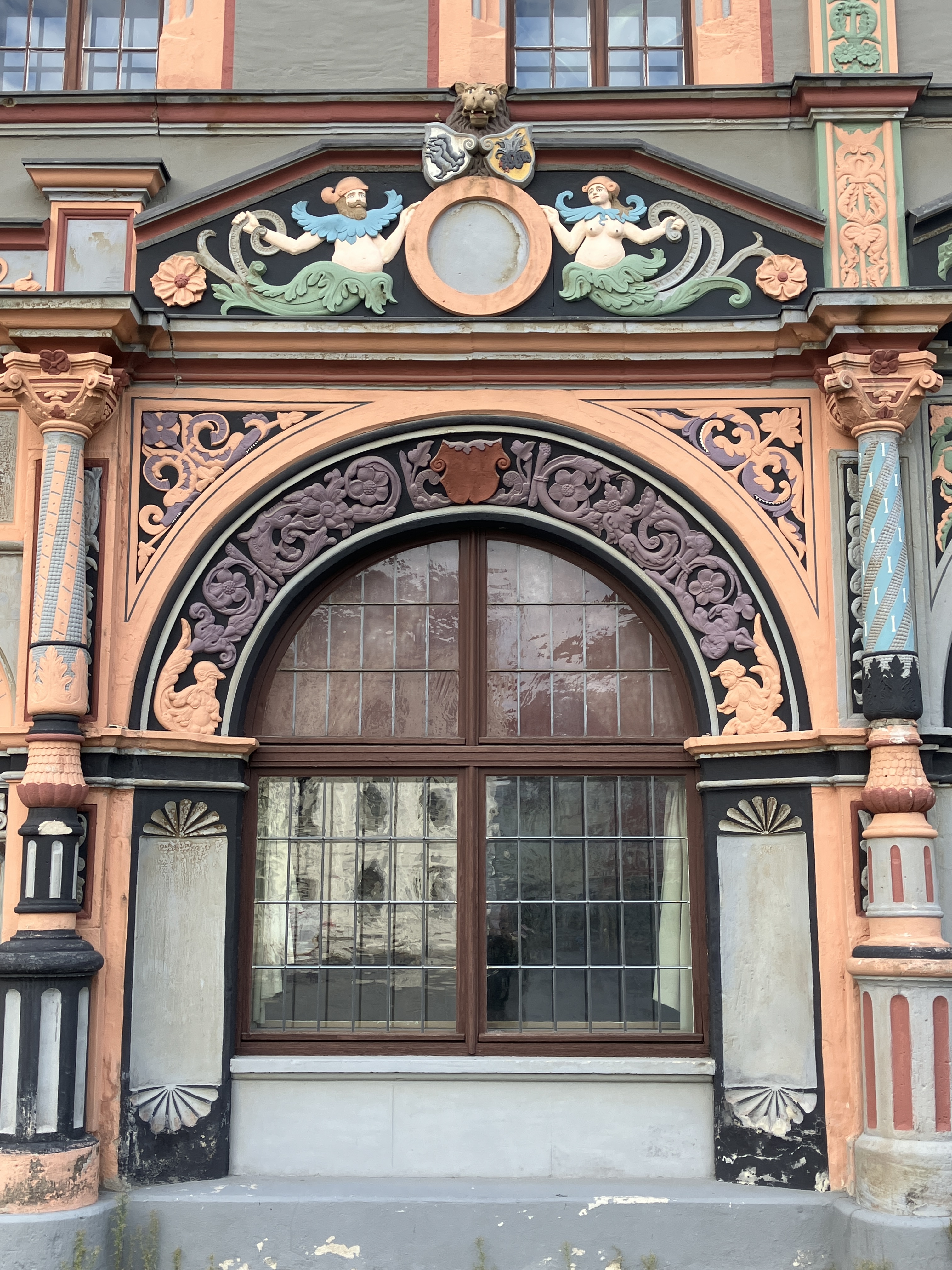
We took a bus out of town to the Schloss Belvedere. The buildings are used by a music school, so we enjoyed wafts of cello, horn, flute, and vocal exercises as we admired the palace.


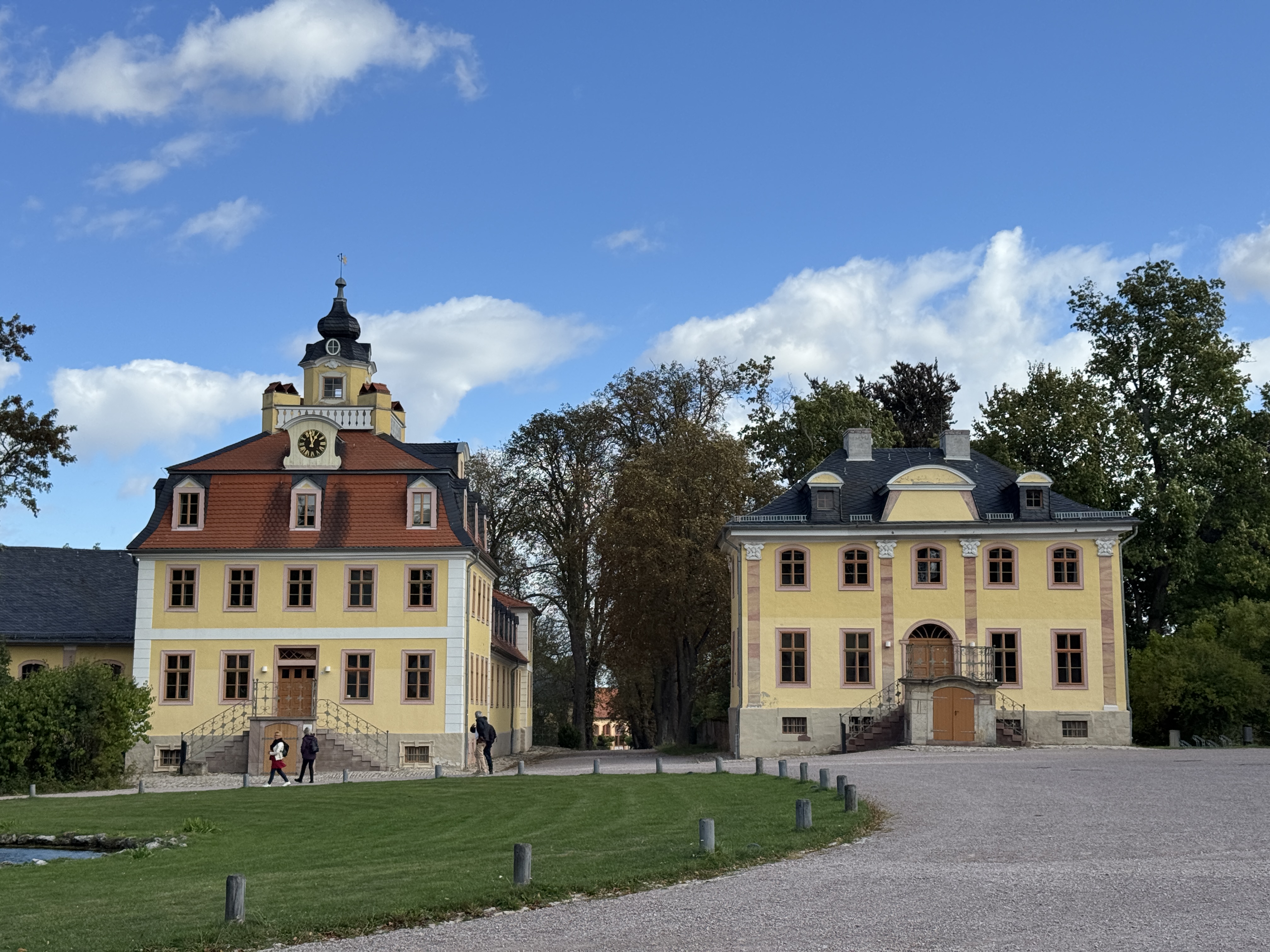

We strolled through the surrounding park with giant trees, perennial beds, an orangerie, and formal gardens.

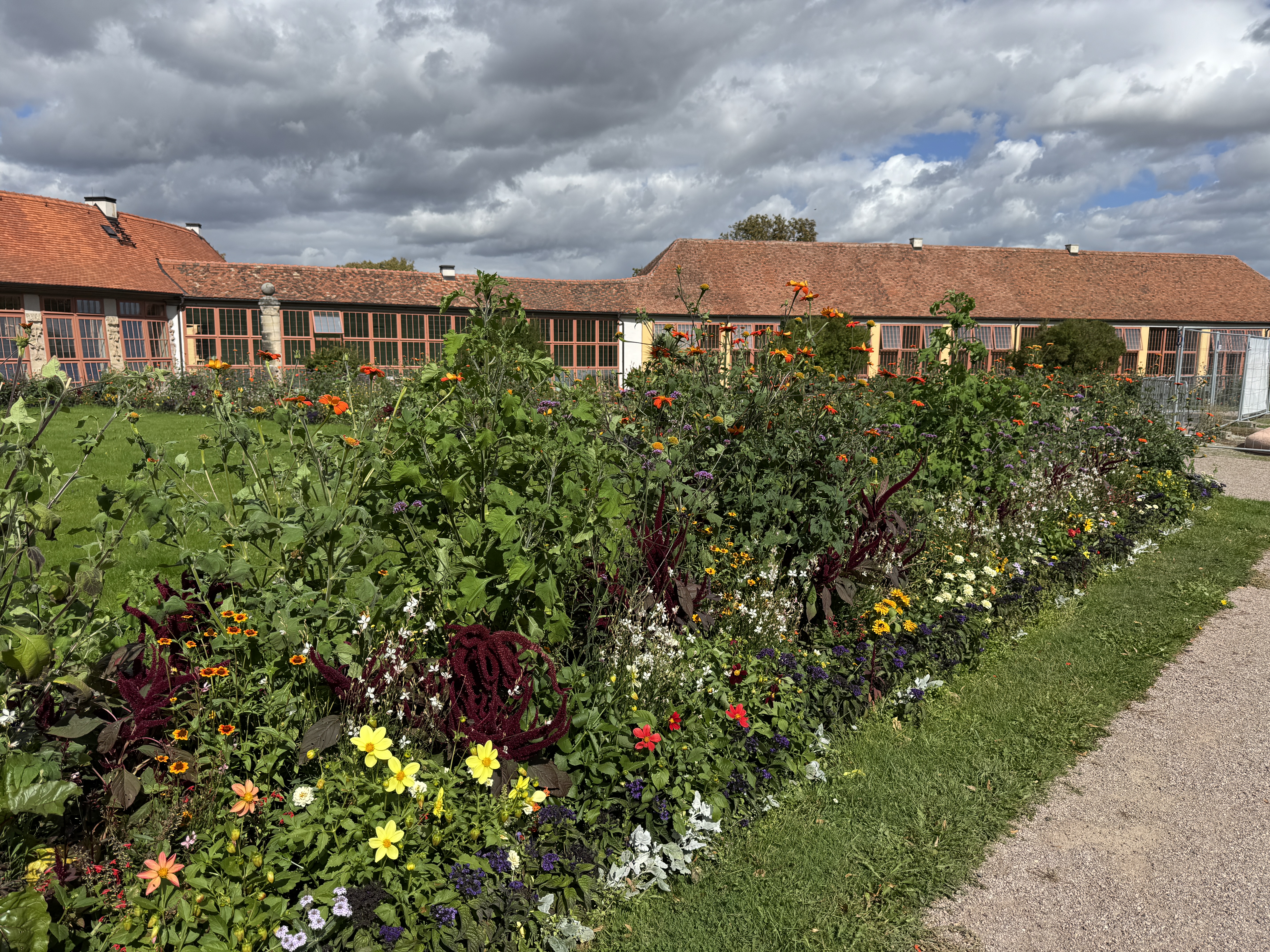

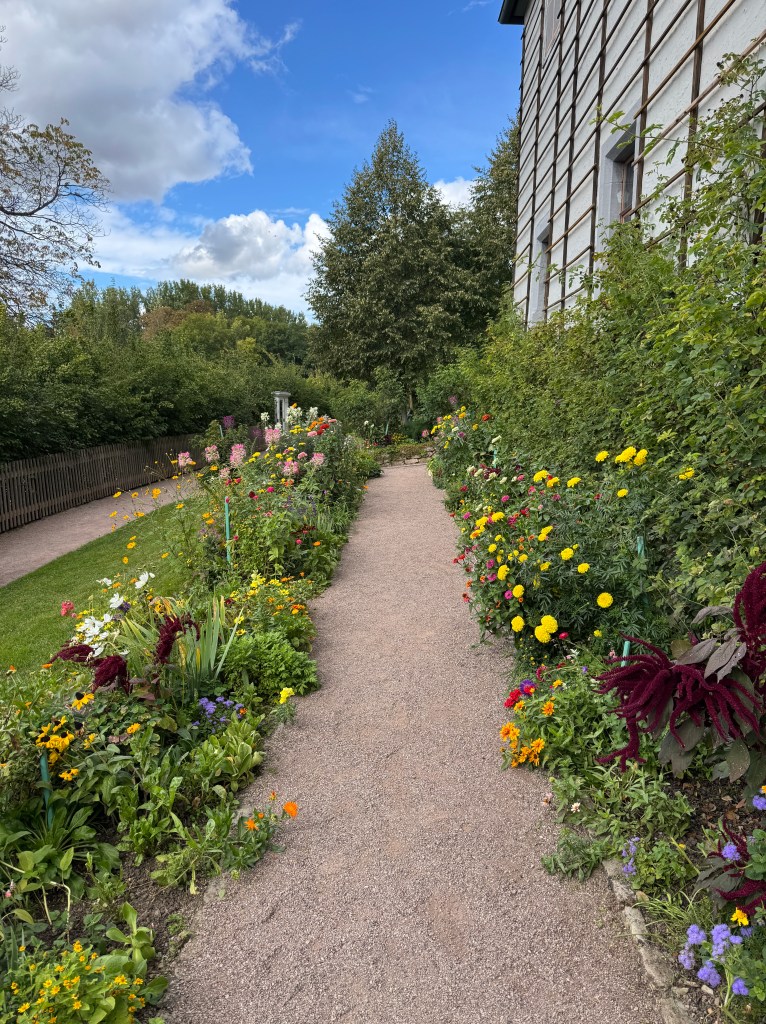
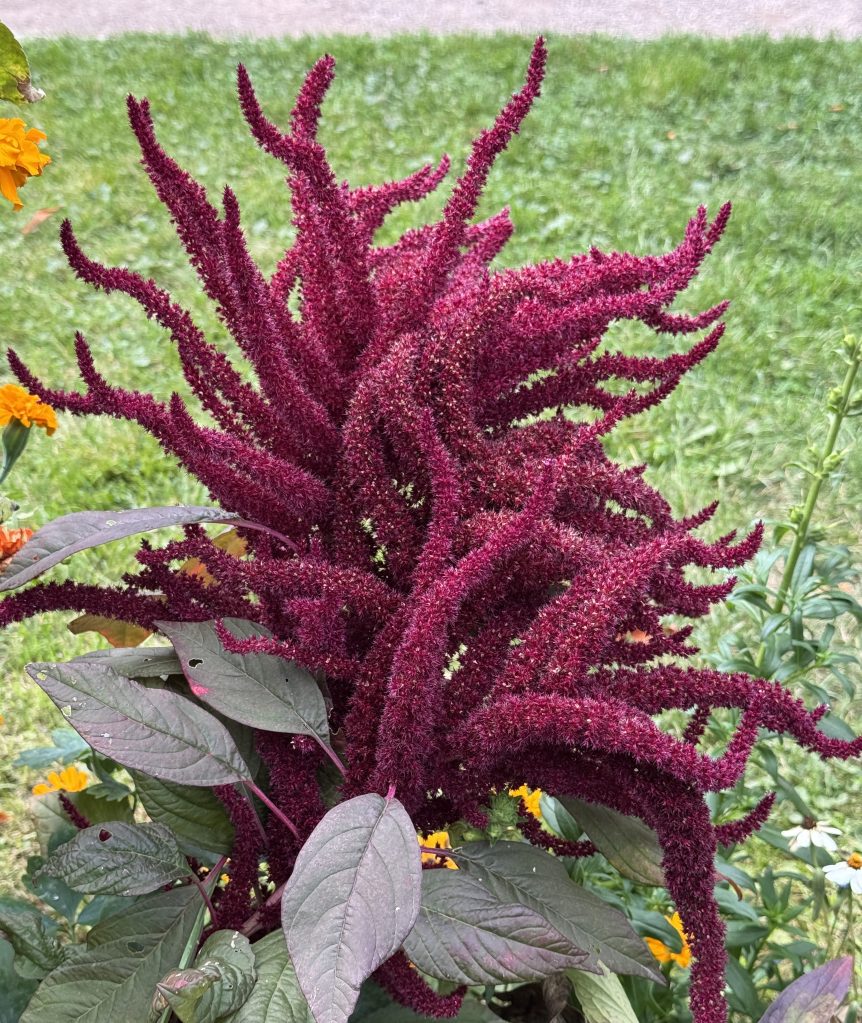
Then we walked into a small enclosed garden with an explosion of flowers.


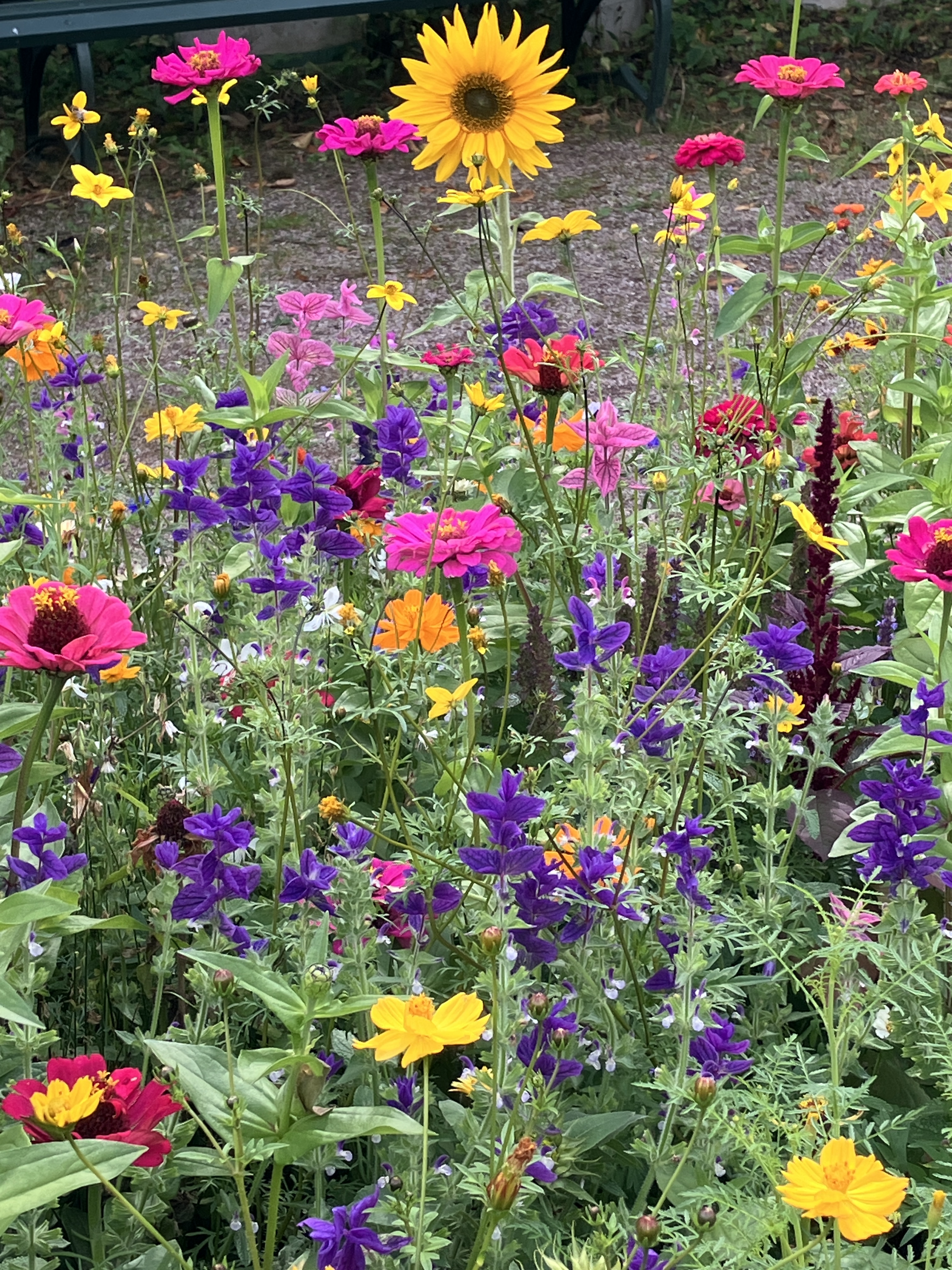
Wow. We stayed a long time and could barely tear ourselves away. I need to try to do this at home!
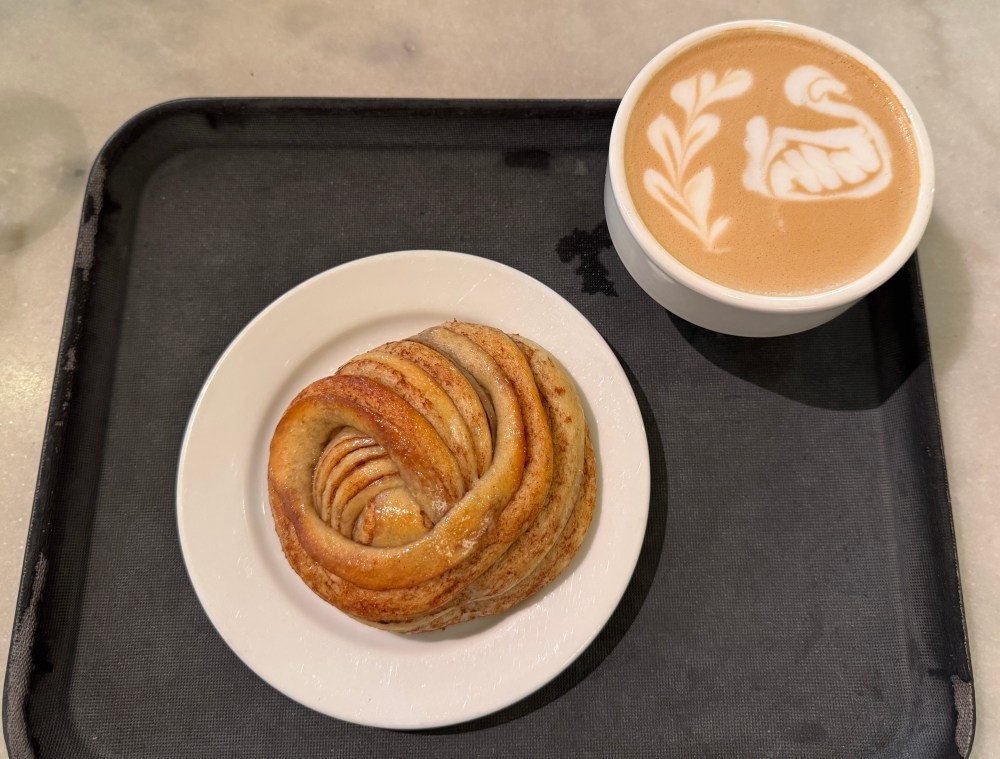
We were in Weimar three full days and we went to the Brotklappe bakery five or six times (sheepish grin). In addition to their amazingly good cinnamon rolls, they had a latte artist on staff. I had never before seen such a detailed latte “picture”. How the heck do they do that??
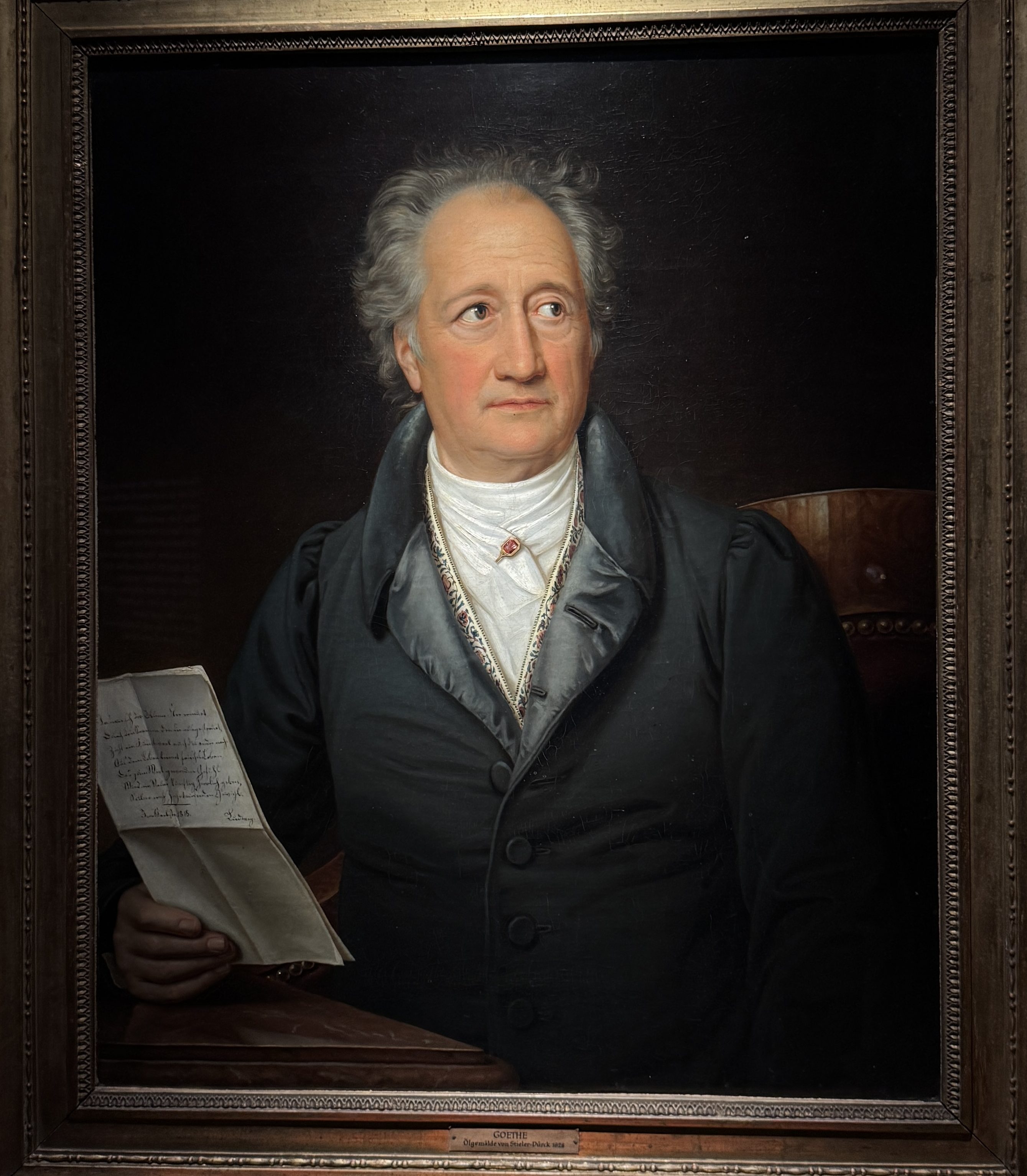
And in closing, a few of the many, many faces of Goethe to be seen in Weimar…



 Beyond Our French Adventure
how did you get so many photos without any people?
Sent: Monday, September 22, 2025 at 5:42 AM
LikeLike
The beauty of traveling in September instead of the summer! And of going to places that are a little off the beaten path…
LikeLike