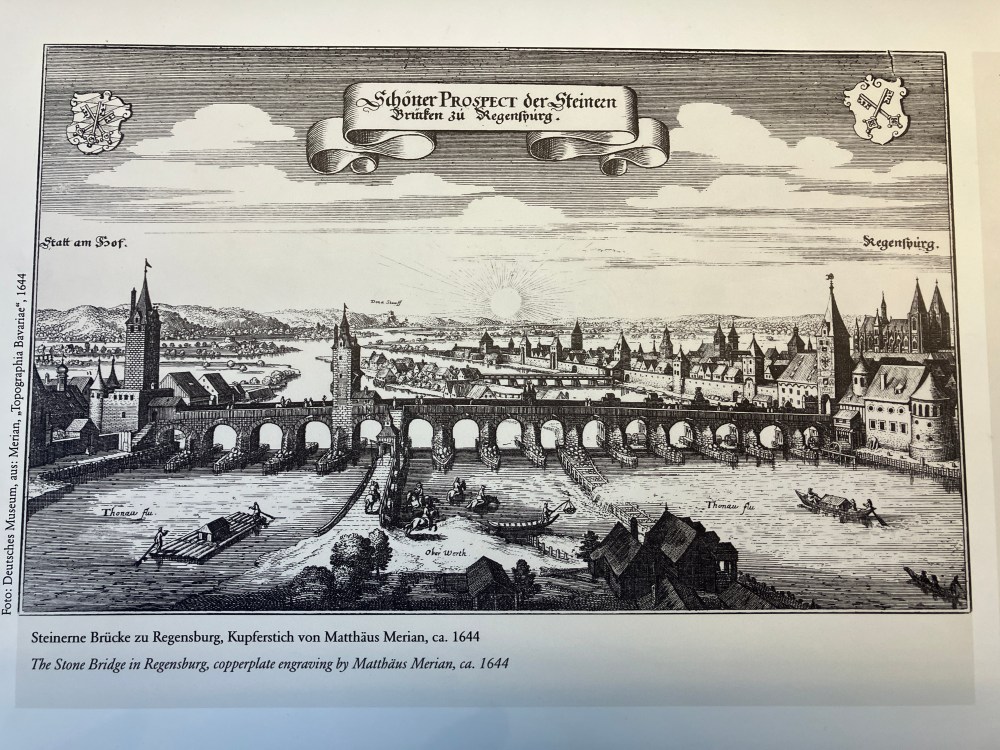
We enjoyed two days in Regensburg, an old city on the Danube. Perhaps the most famous sight in Regensburg is the 336-meter-long stone bridge, built in just 11 years (1135 to 1146). Considering that many cathedrals took centuries to build, that seems incredibly fast. Perhaps commerce was more urgent than housing the archbishop?

Or perhaps the devil was helping. On the boat ride we took, they told us the bridge was nicknamed the Devil’s Bridge. The bridge and the Regensburg cathedral were being built at the same time. The two builders bet each other that their respective construction would be done first. When the cathedral was going up faster than expected, the bridge builder made a deal with the devil: If the devil helped the bridge be done first, he could have the first three souls that crossed it. The bridge was done first, but the builder tricked the devil by forcing a rabbit, a chicken, and a horse across the bridge before any people crossed.
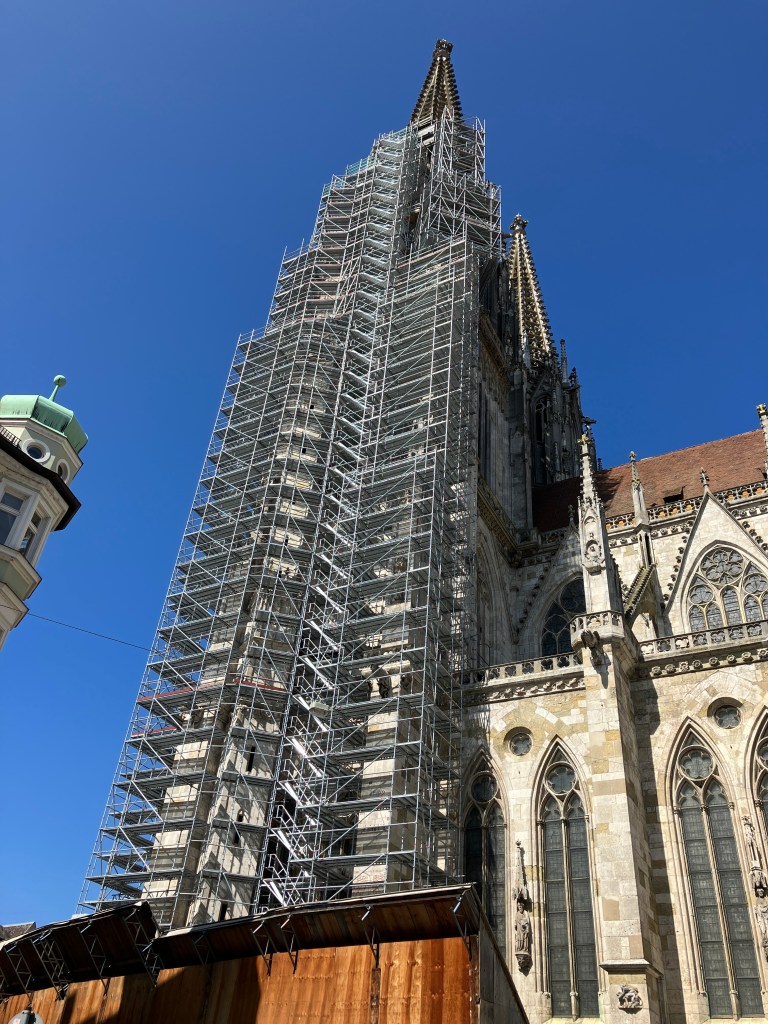
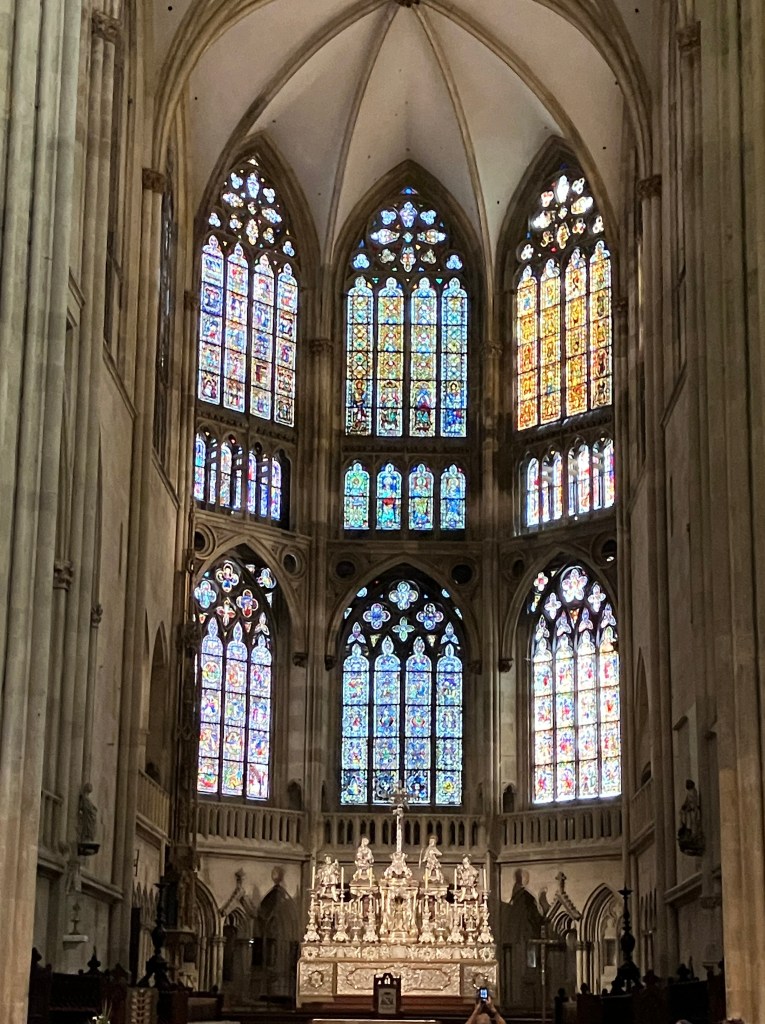
The cathedral, like every other one we’ve seen, was having some work done.

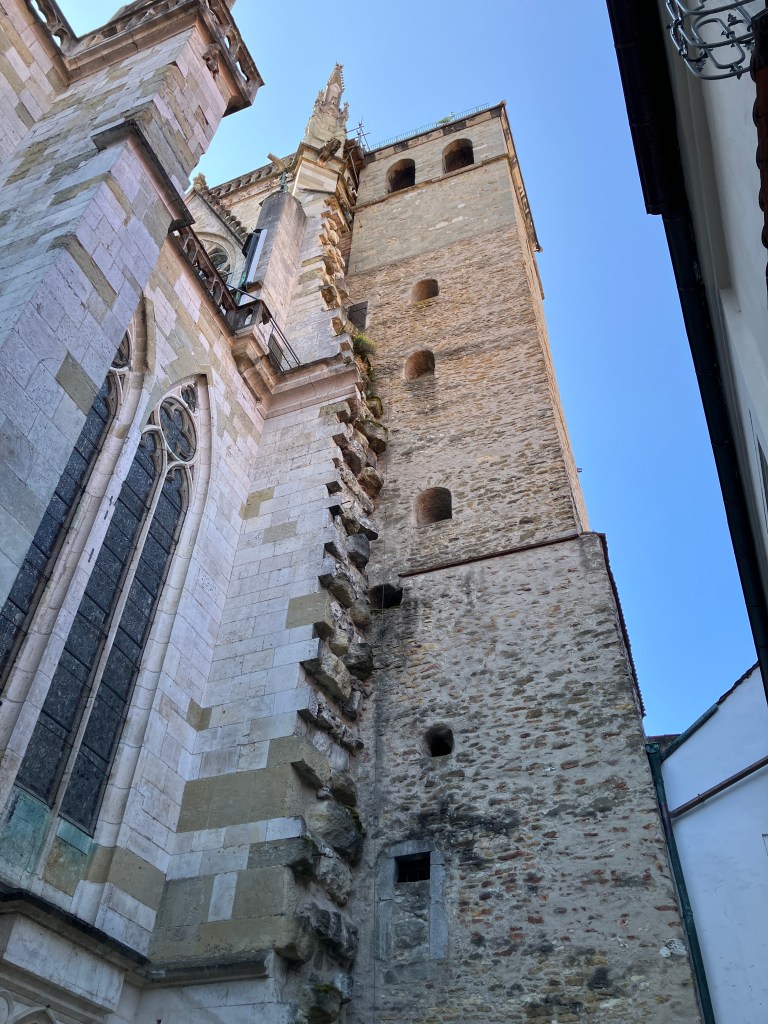
This cathedral (Dom St. Peter), more than many we’ve seen, looked as if it had addition after addition after addition. A back courtyard shows it more starkly:
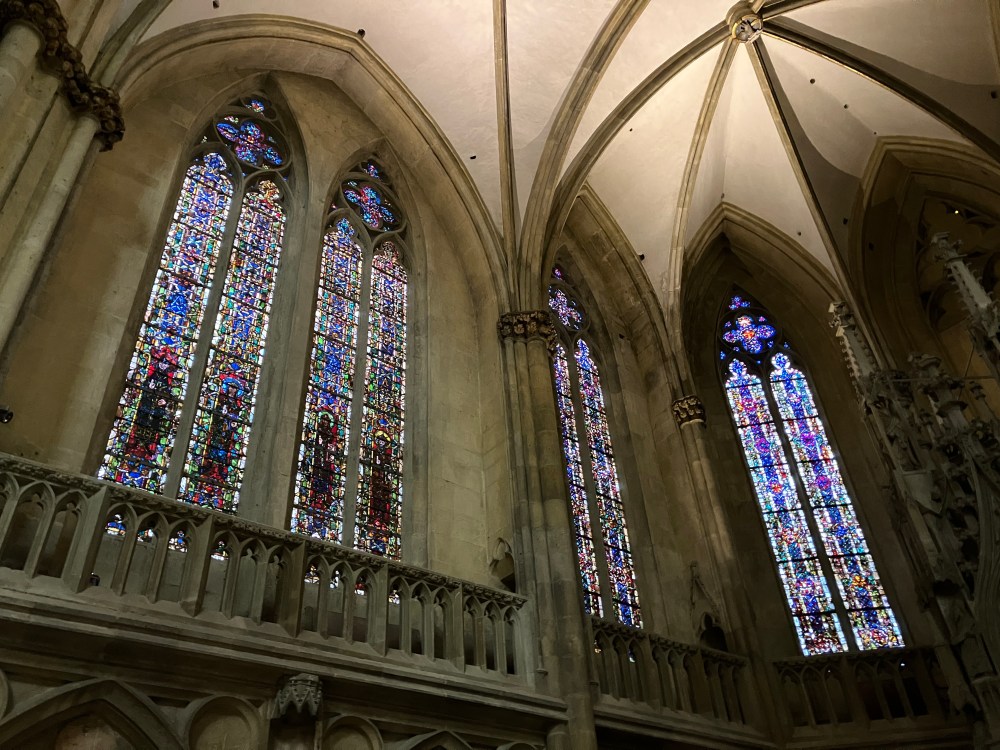

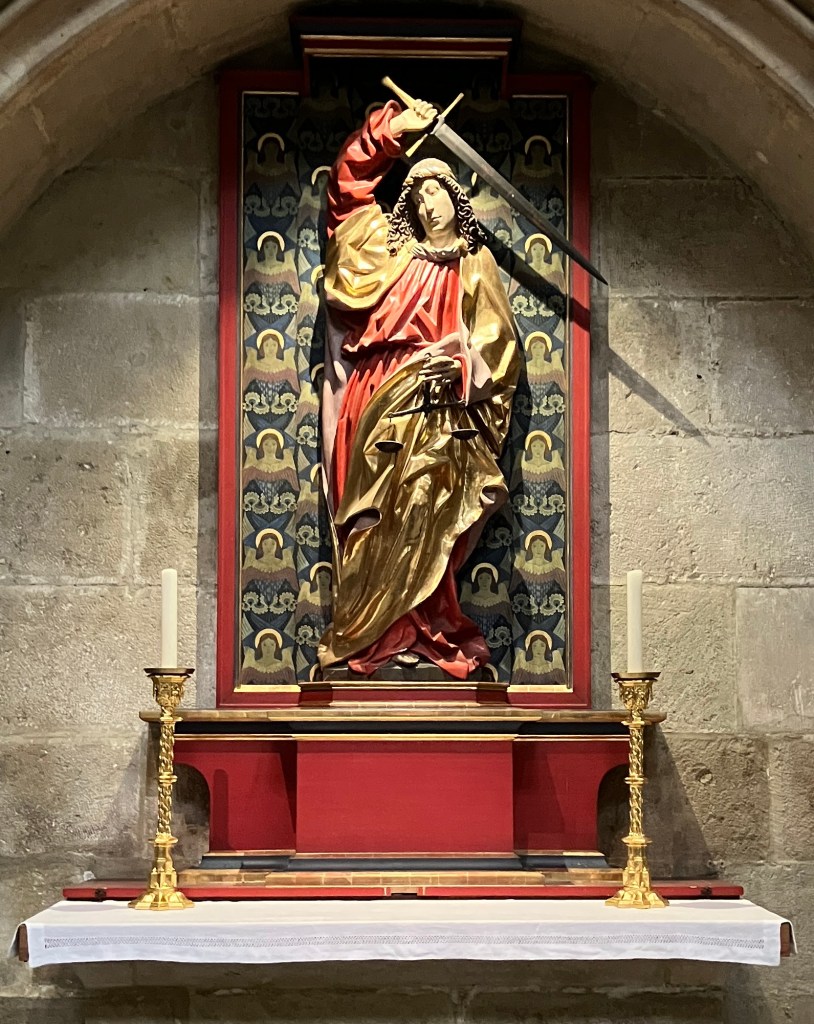
Who is the young woman in the picture on the left above? Did she grow up to be the woman on the right? (At least, I think it’s a woman…)
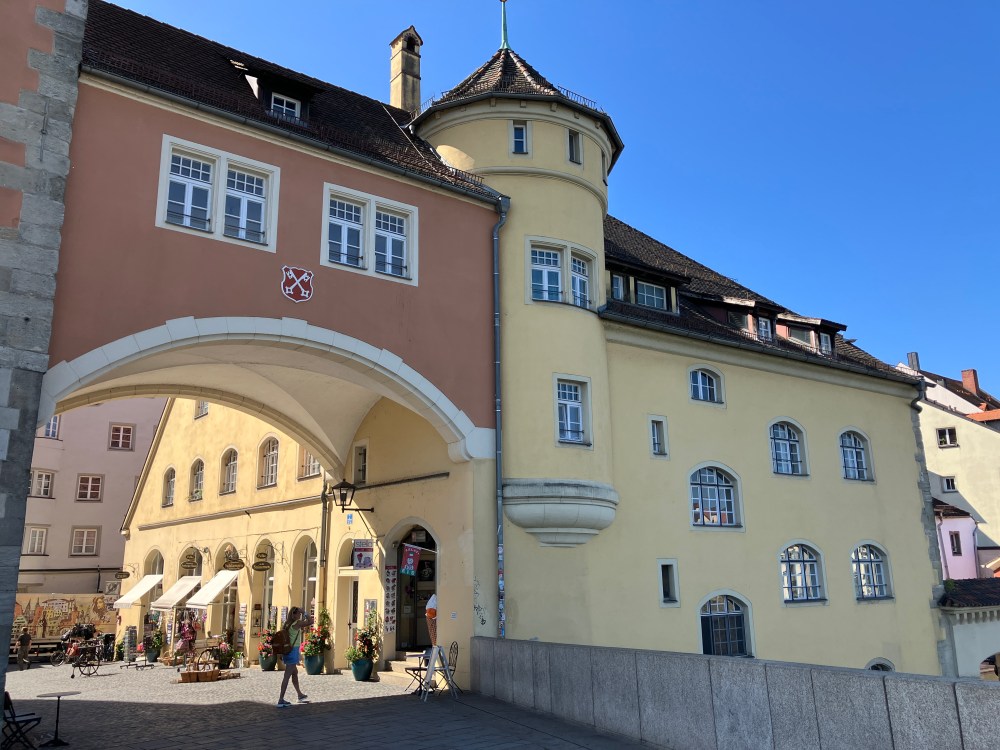
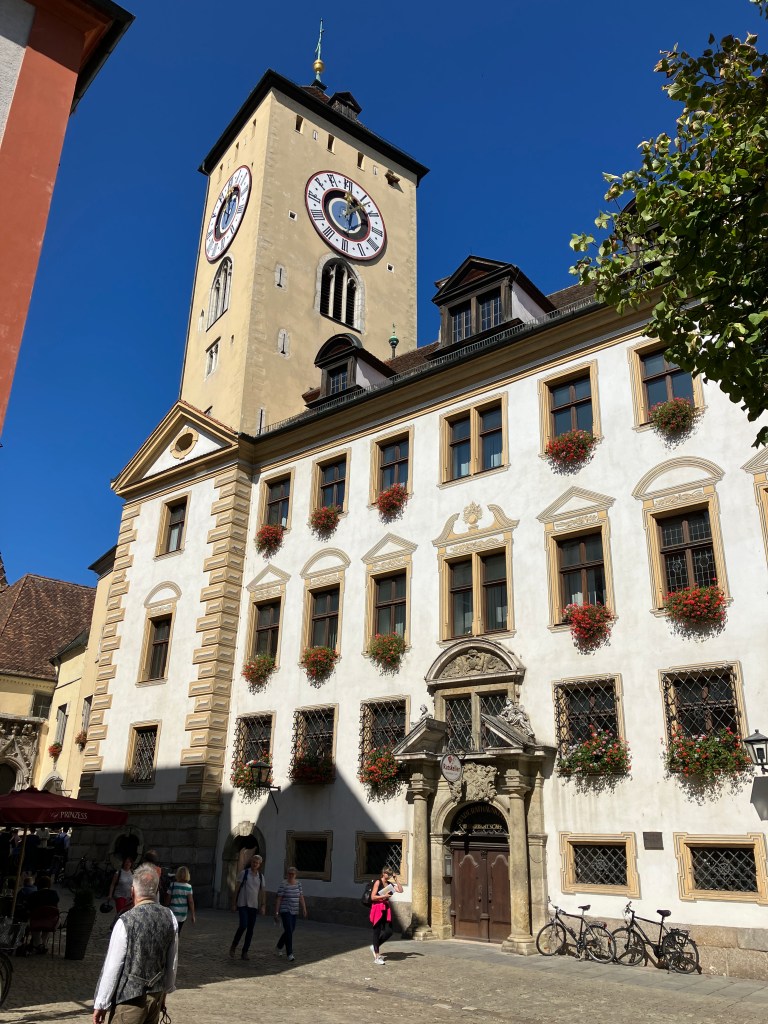
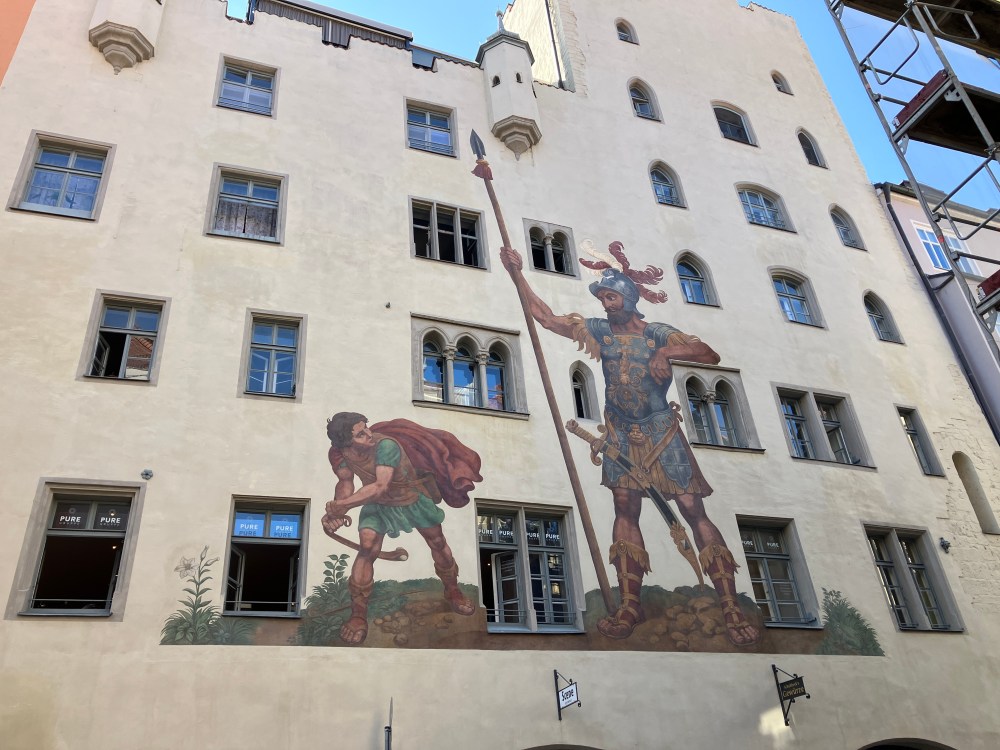
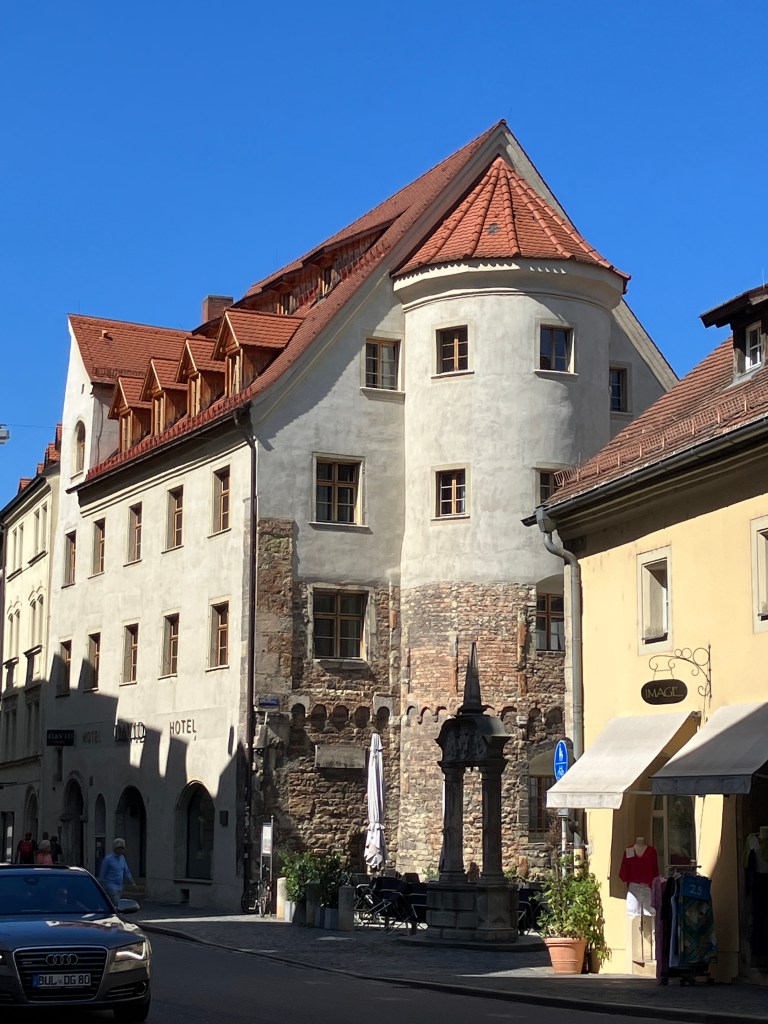
The old city is a great place to stroll and look at the interesting buildings.
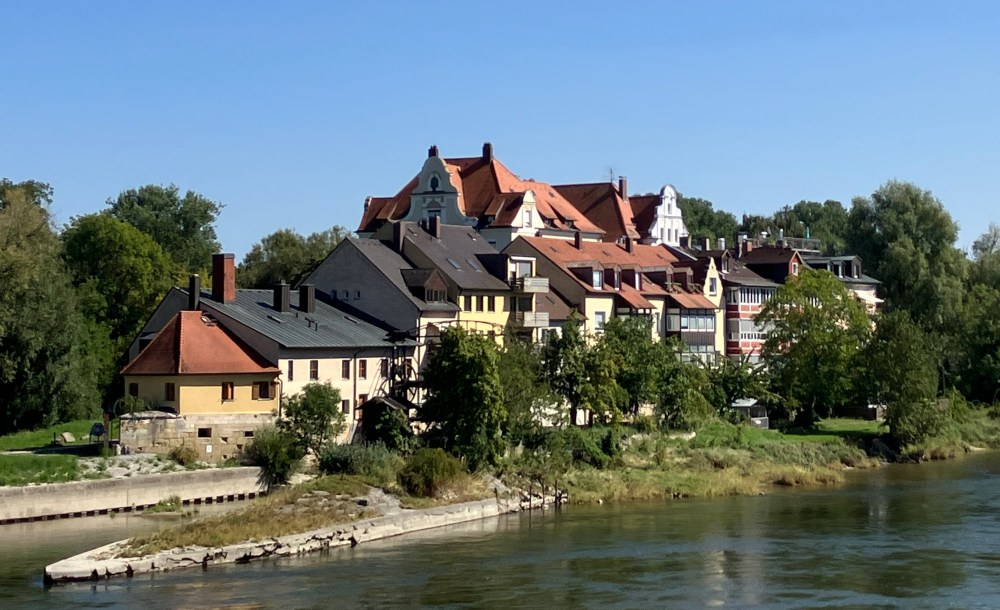
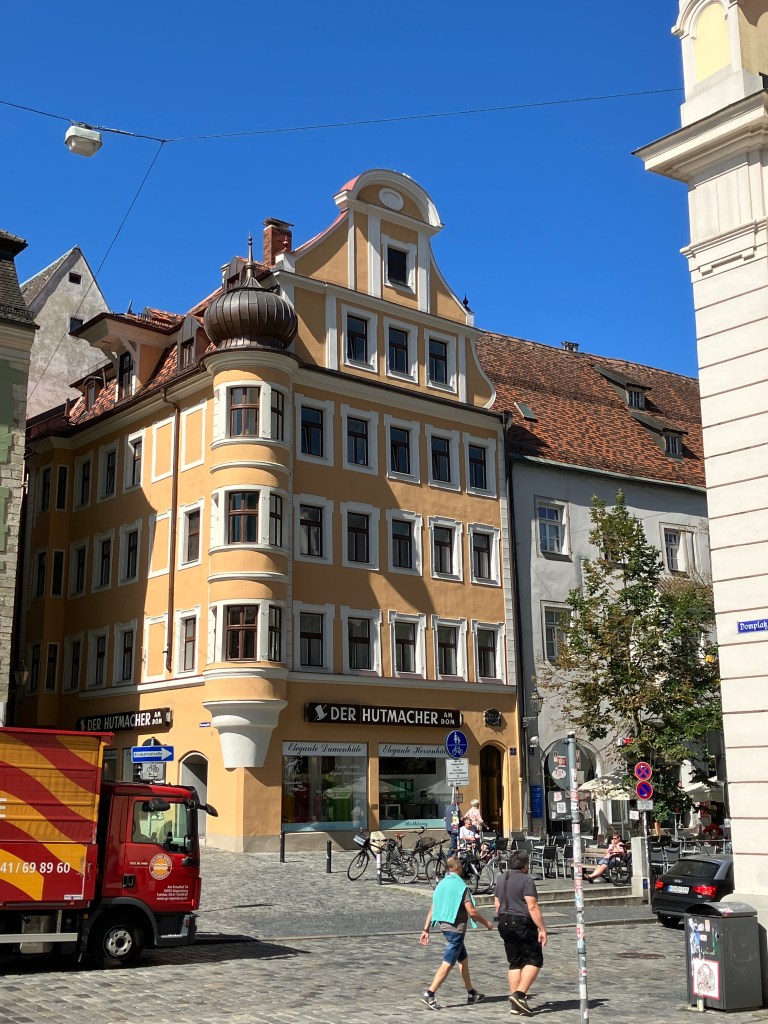
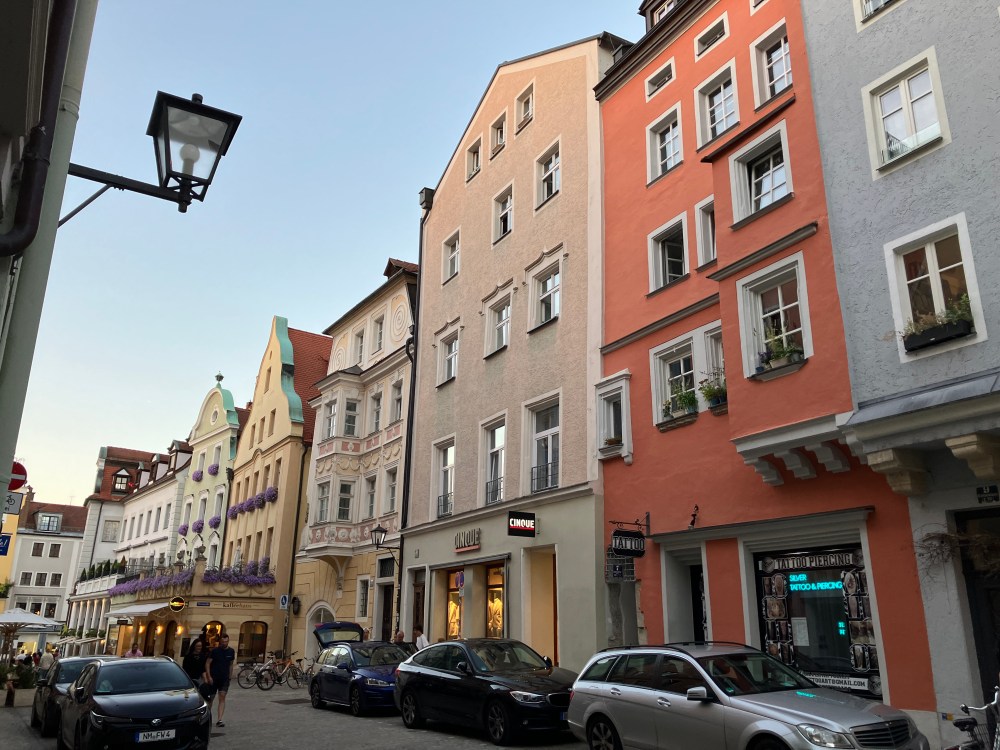
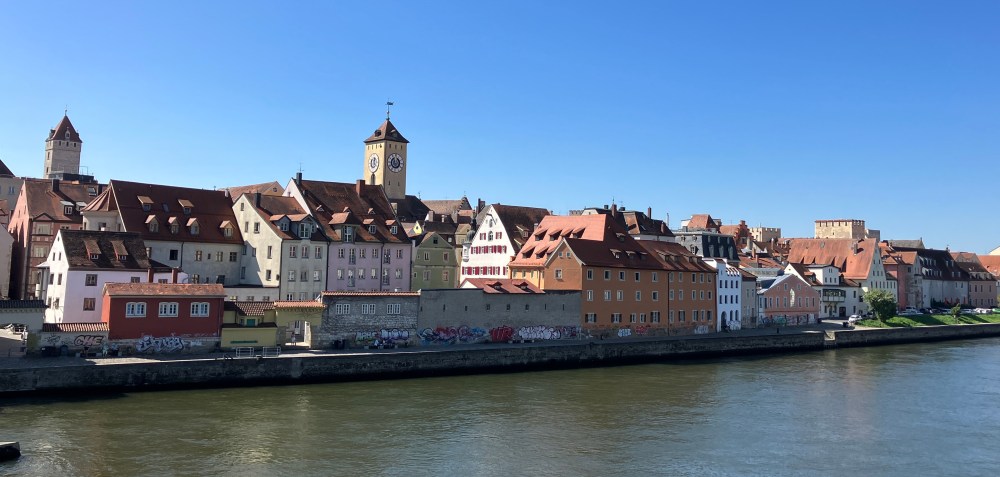
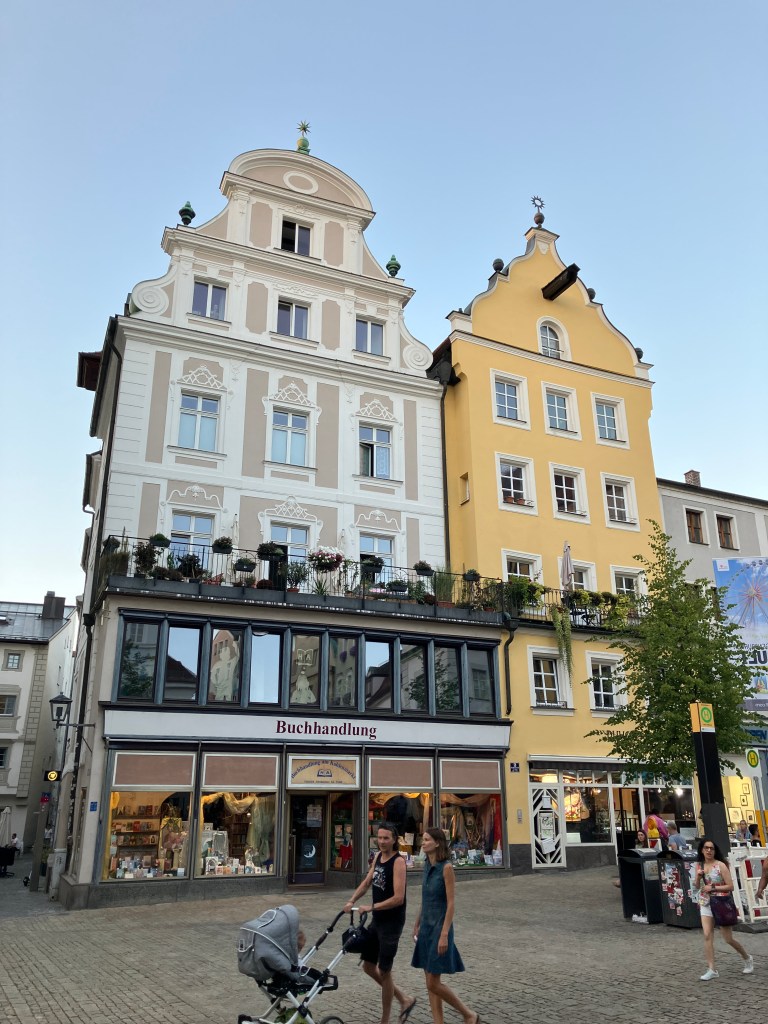
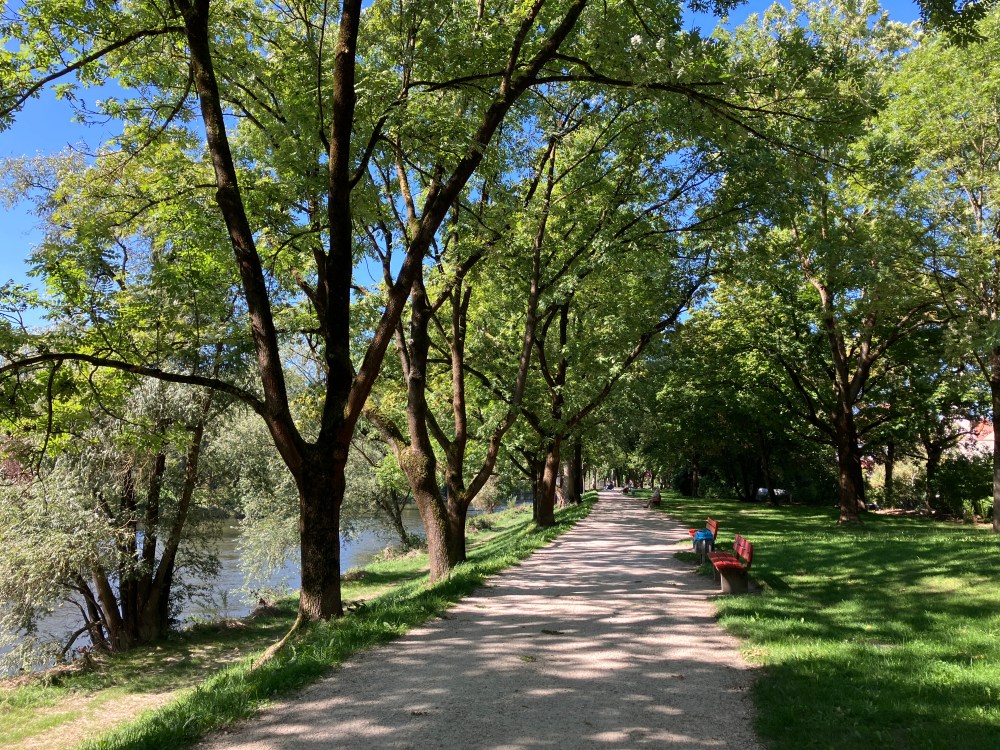
When you cross the river to a series of islands, there’s lots of public park space – something we often do so poorly in the US.
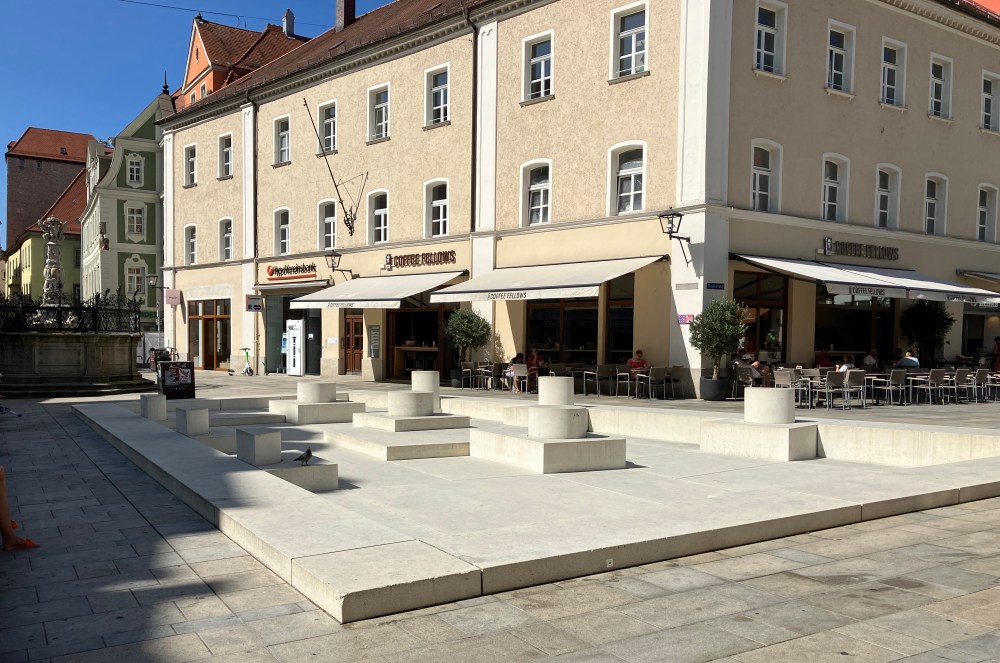
Get a little further away from the old city, and things suddenly turn modern.

When we checked into our rental, the landlord showed us a few things on a map, including the old Jewish quarter, noting the Jews had been “pushed out”. A memorial on the site of the old synagogue stated the Jewish quarter had been razed as pogroms raged. Sounds more violent than “pushed out” to me…
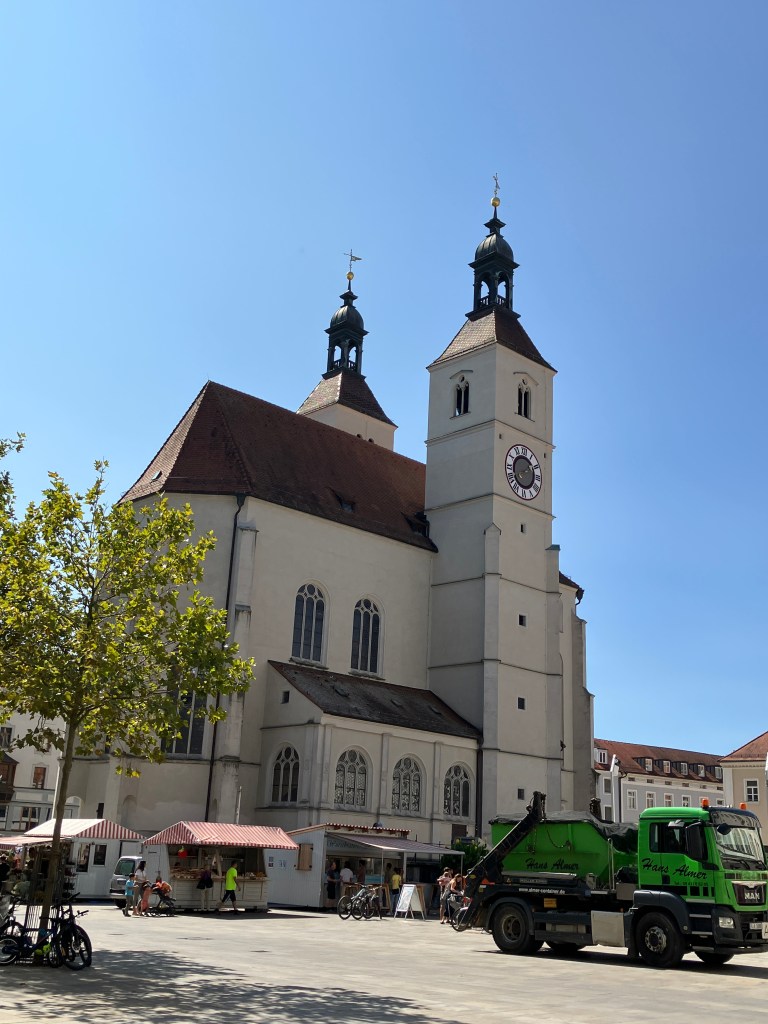
Regensburg seemed to have a church on every other block. The Neupfarrkirche (new parish church), next to the Jewish memorial, particularly appealed to me. Its simple interior looked like a much more peaceful place to worship than the grand cathedrals we often tour. A bit of the glow came off, however, when I realized it had been built just a couple of decades after the pogroms, right on top of the razed Jewish homes and businesses.
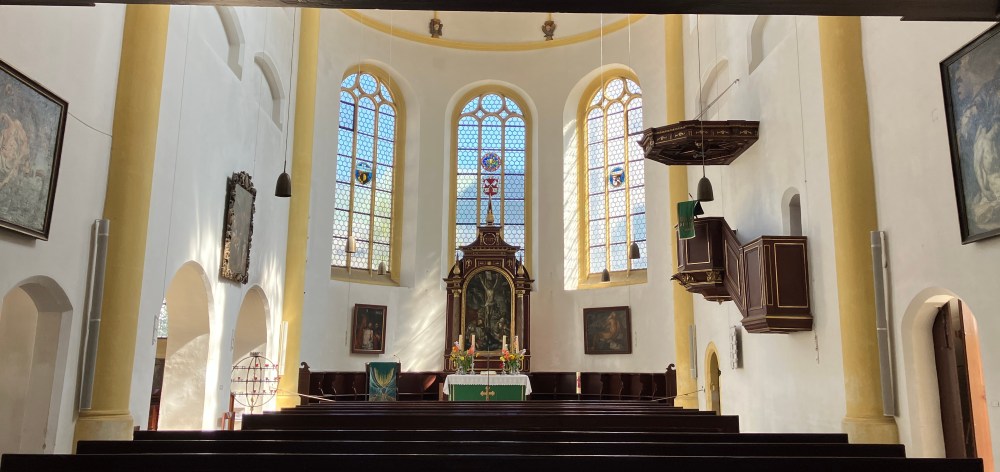
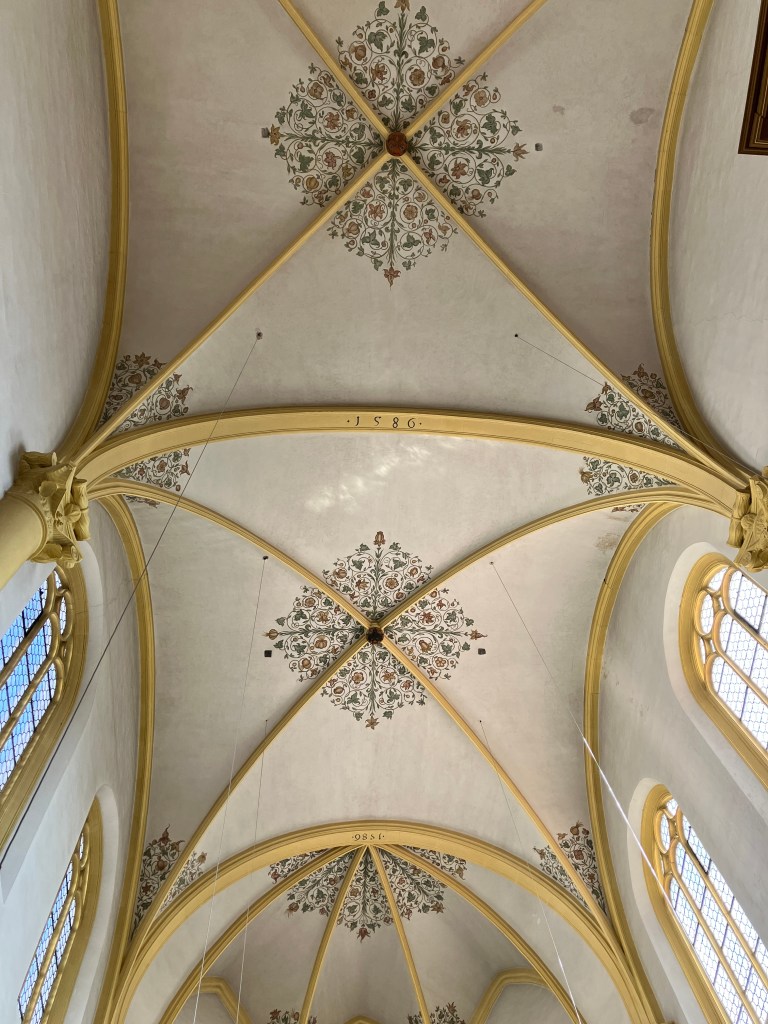
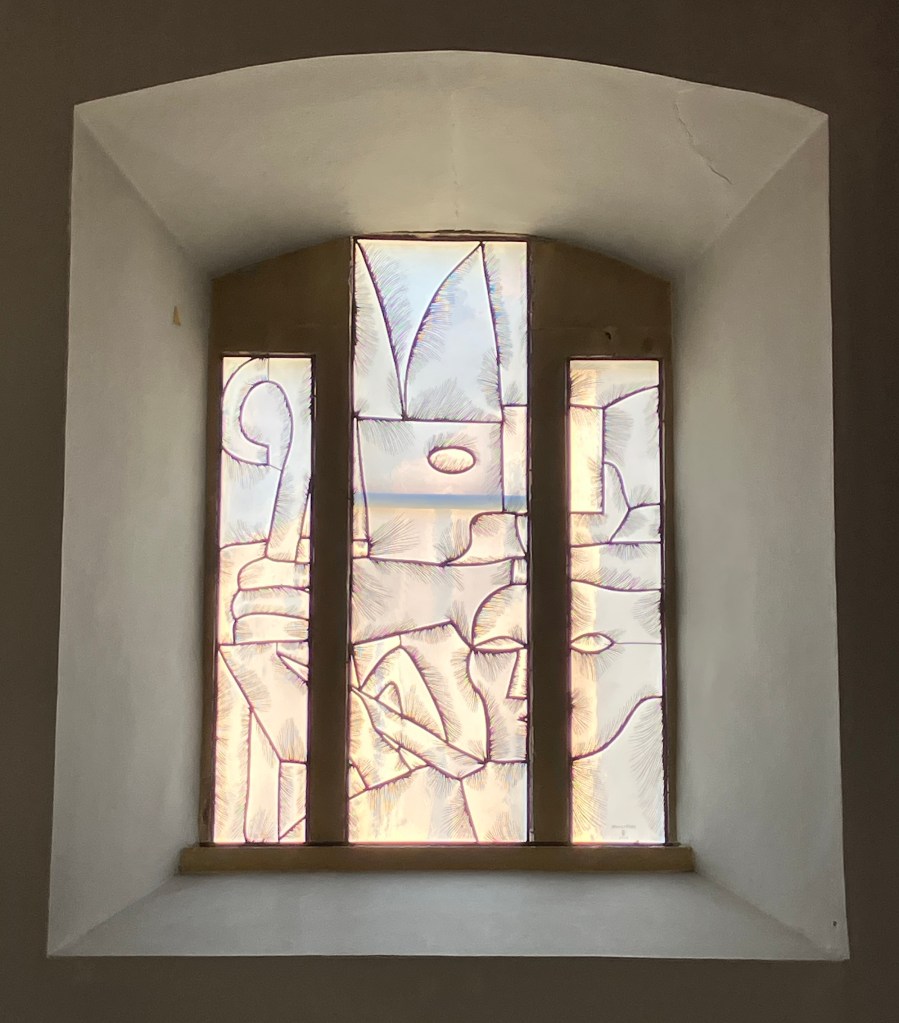
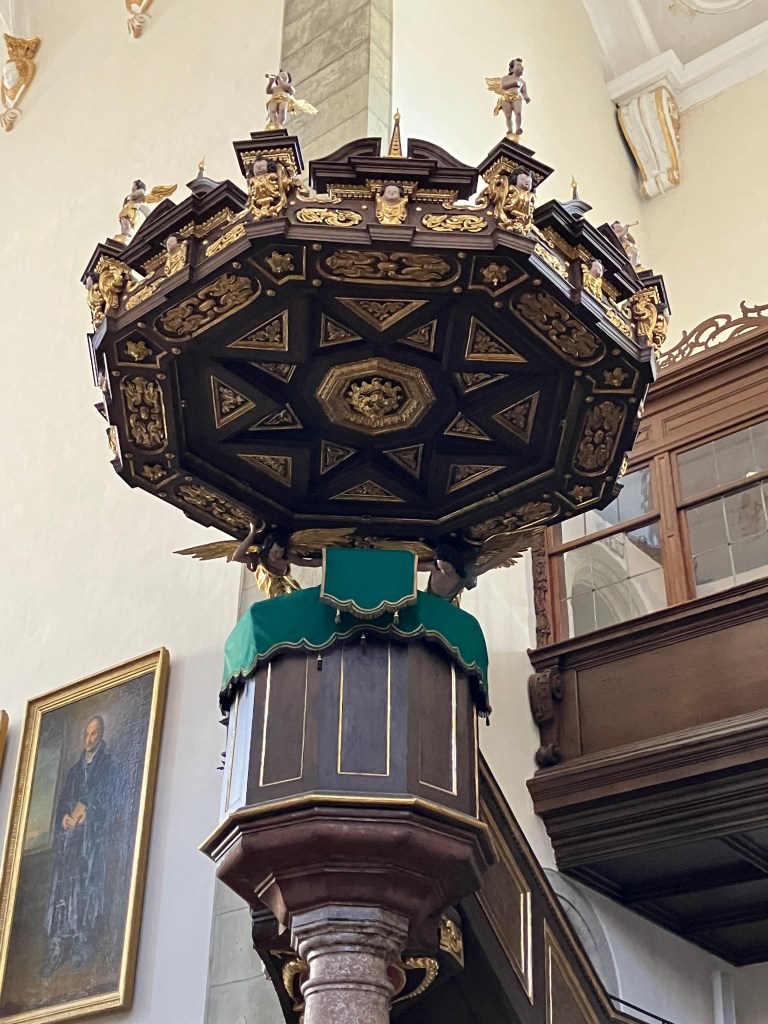
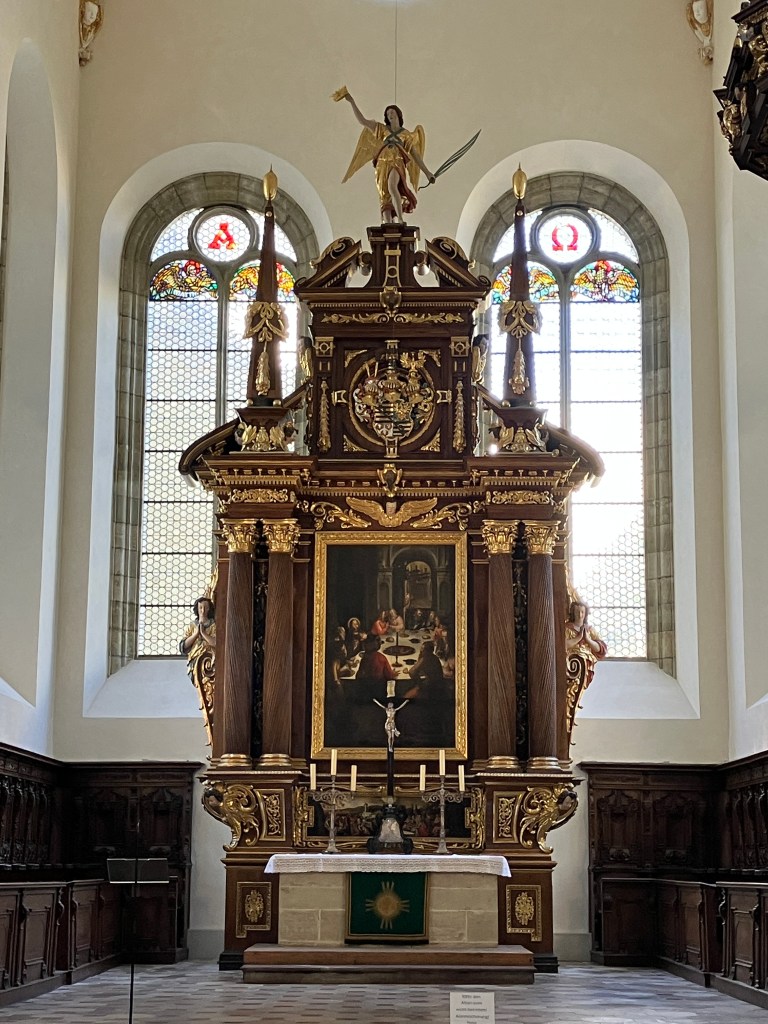
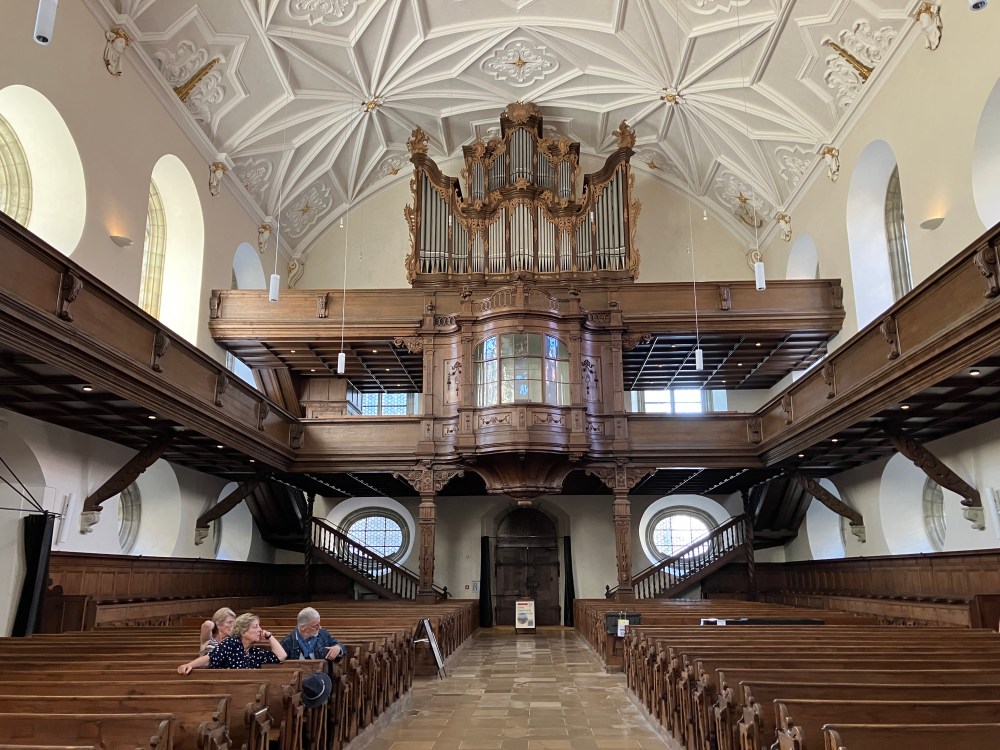
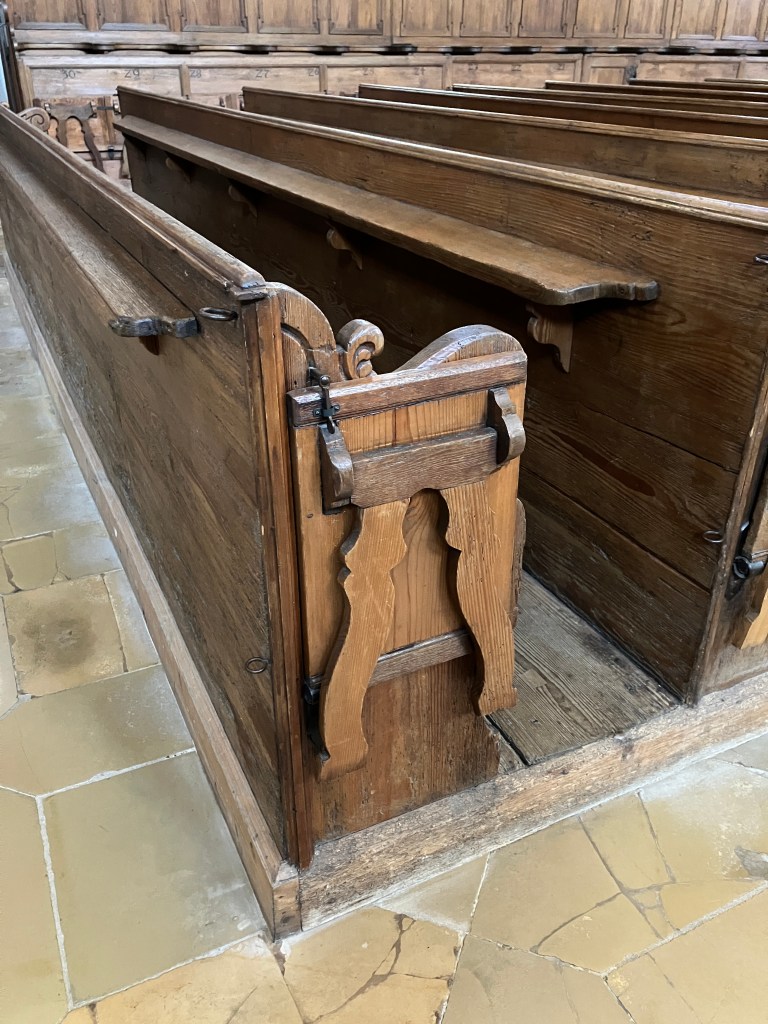
The third church of the day, the Dreieinigkeitskirche (Trinity church), had yet another look: massive wood that seems a bit clunky in the sanctuary, but not around the organ!
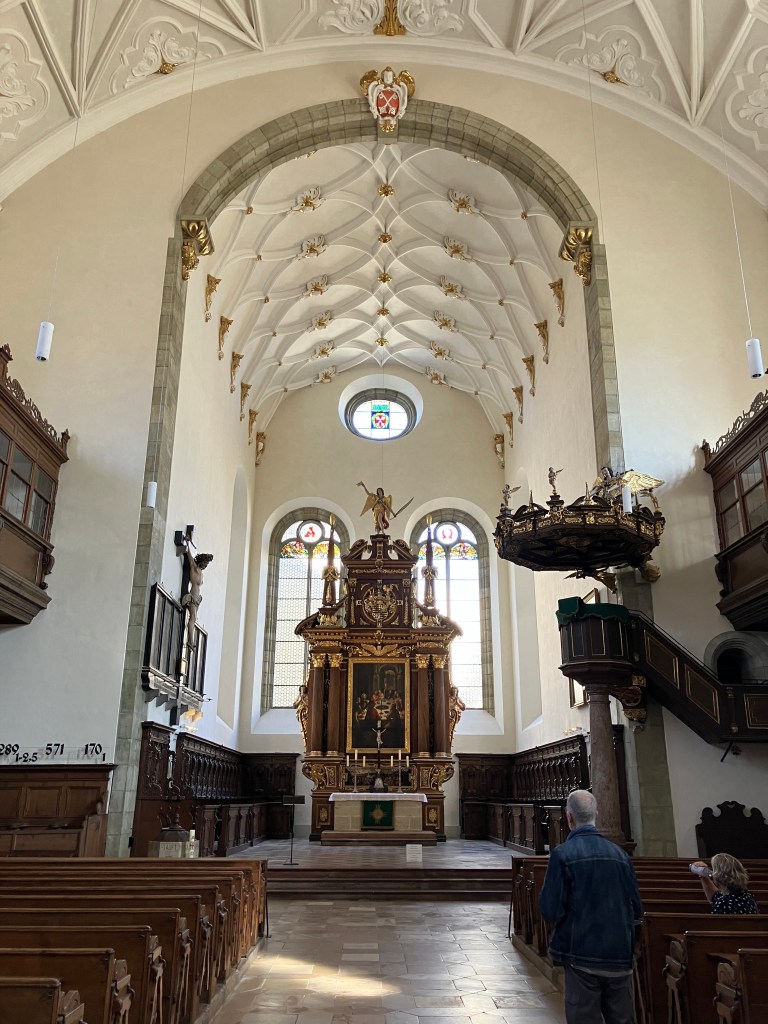
–
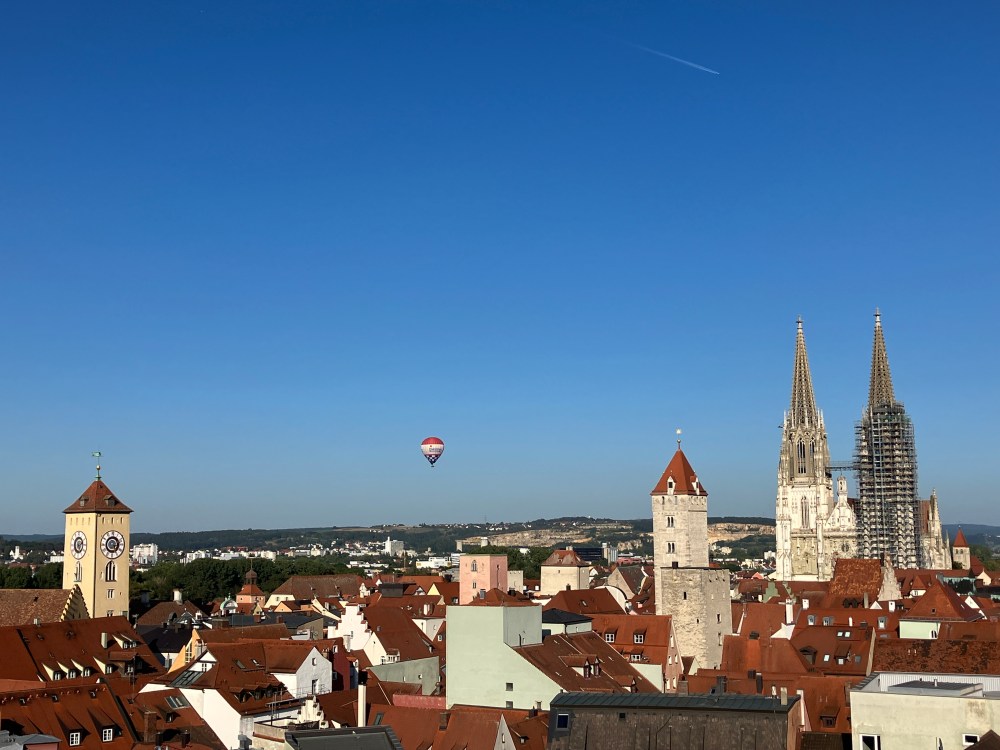
A mere 157 steps up, its tower gave 360-degree views of the city.
Then it was back to the streets…


 Beyond Our French Adventure